Thursday, November 30, 2006

Looking for Paintings - Part 10

Back in Portland

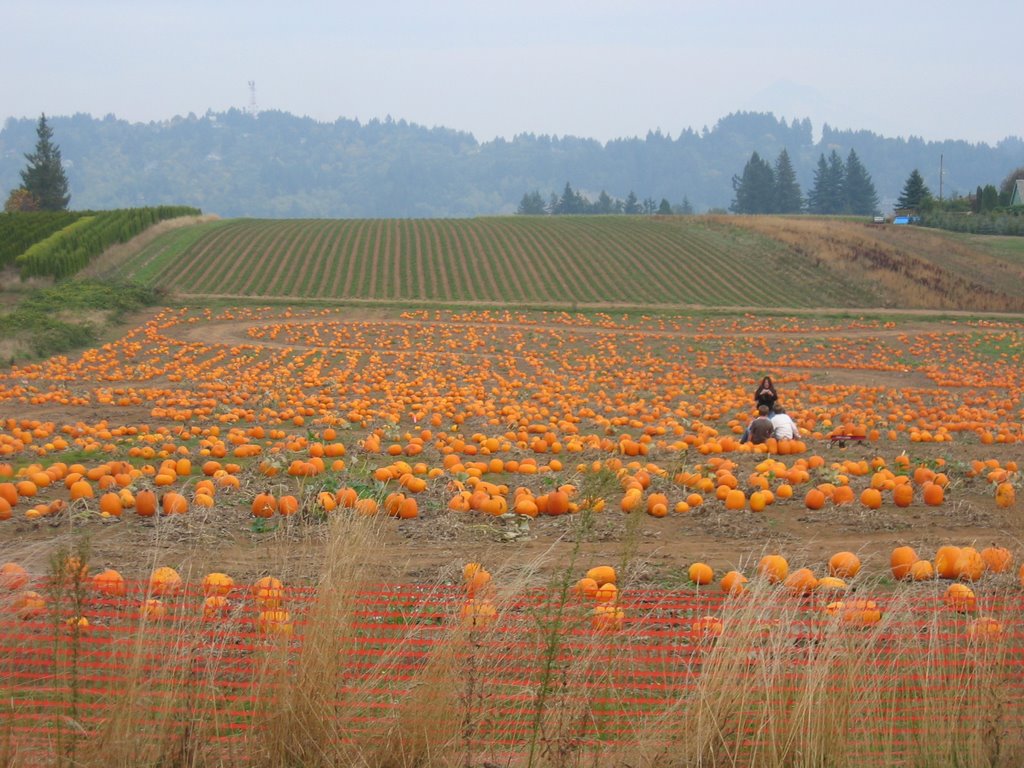
So it's the week of October 9 and I'm back in Portland at Jack Heiter's house waiting for a meeting with the folks at Laika. The weather is perfect and I'm out exploring the area. This is a pumpkin patch in Gresham, a town a couple of miles east of downtown Portland. I like the fact that if you drive about ten minutes out of downtown Portland, you're either in a pumpkin patch, a pasture, a farm or the woods. Click on the picture to make it screen sized.

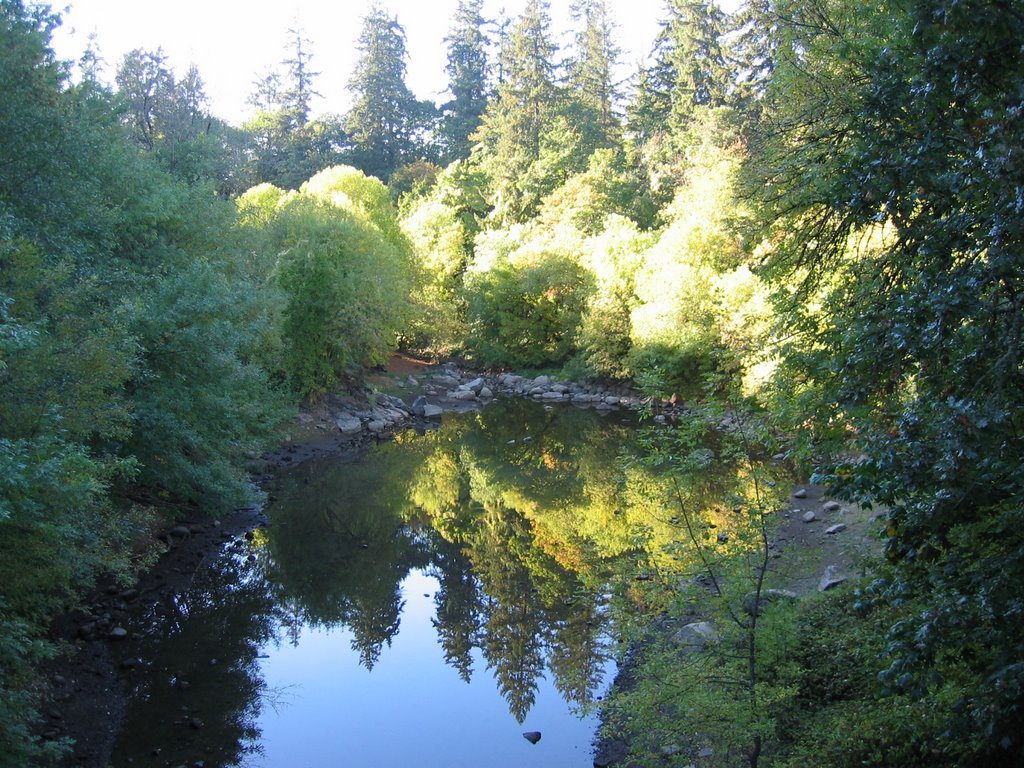
This is Willamette River Park near Lake Oswego.

This is Willamette Falls. I remember the town of Willamette Falls on maps. I don't know why they'd want to change the name of the town to Oregon City, but they did. Not sure what the factory is all about, but it's old, has a lot of character and makes a good picture.

A close up of the factory.

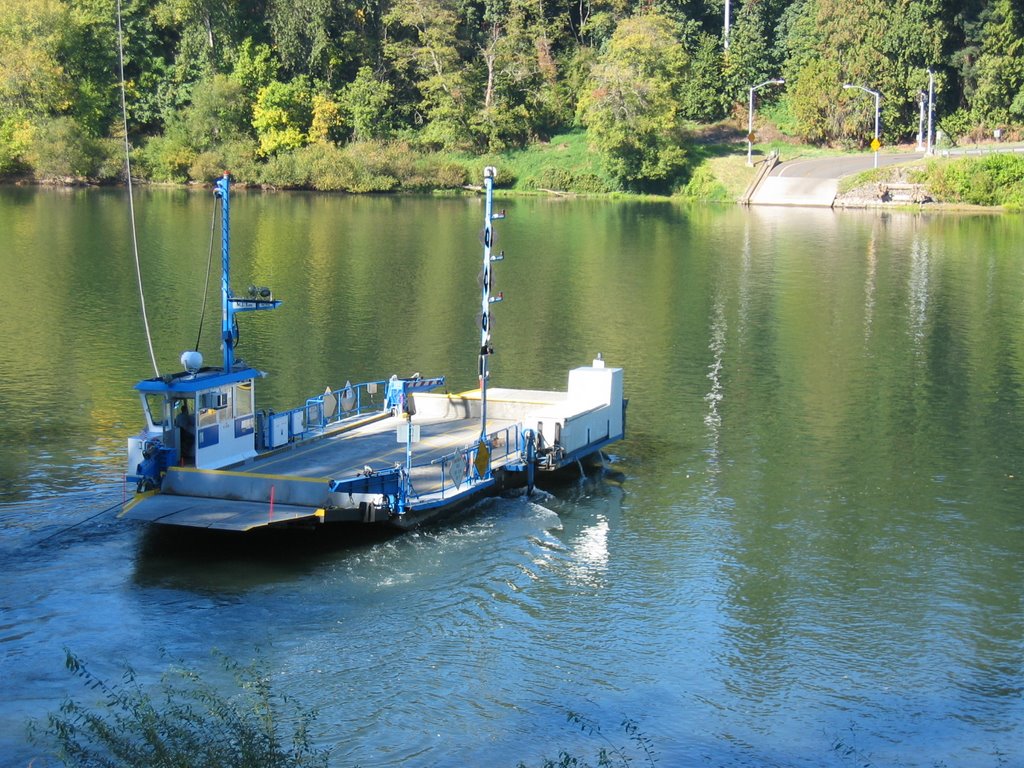
A little south of West Linn is the small town of Canby, which has its very own six-car ferry boat that crosses the Willamette River. It's pretty much a short cut for local residents and it costs $1. The crossing takes about 5 minutes, maybe.

Willamette Park near the town of Lake Oswego.

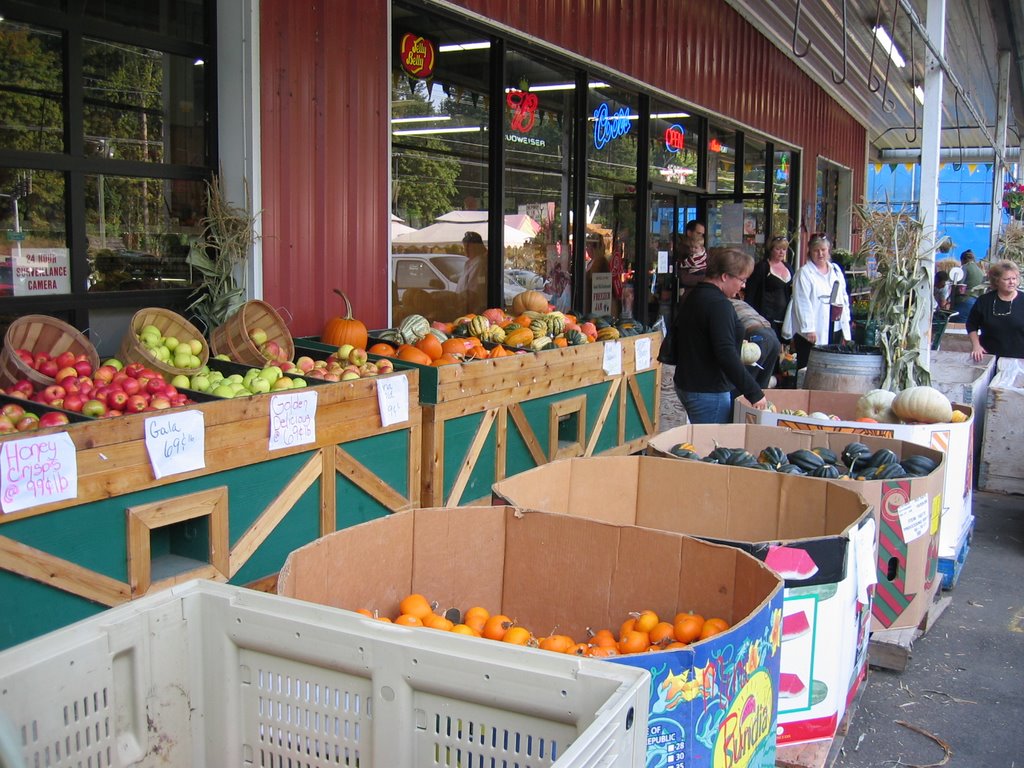
A few days later I found myself back in Gresham where I found this wonderful farmer's market where they had huge wooden tubs and boxes filled with all sorts of apples and squash.


Another pumpkin patch at another location in Gresham.

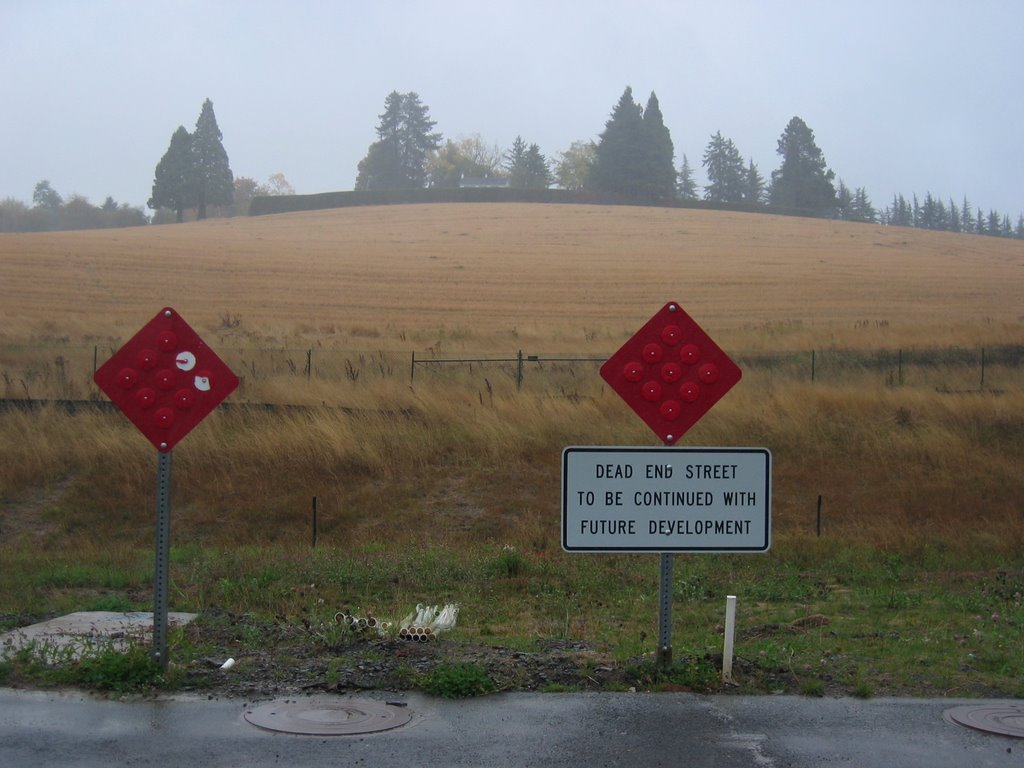
Somewhere in the hills to the west of downtown Portland where they're building big, scenery-obliterating houses near this ominous sign which states: DEAD END STREET TO BE CONTINUED WITH FUTURE DEVELOPMENT. I love the sentiment.

I nice foggy hillside at the same location, minus the Dead End sign. I hope the hillside wins.

Next: From my balcony and around the neighborhood.

Wednesday, November 29, 2006

Looking for Paintings - Part 9

Route 90 to Seattle

Don't forget to click on the image to make it full-screen. Click the "Go Back" arrow to return to normal.

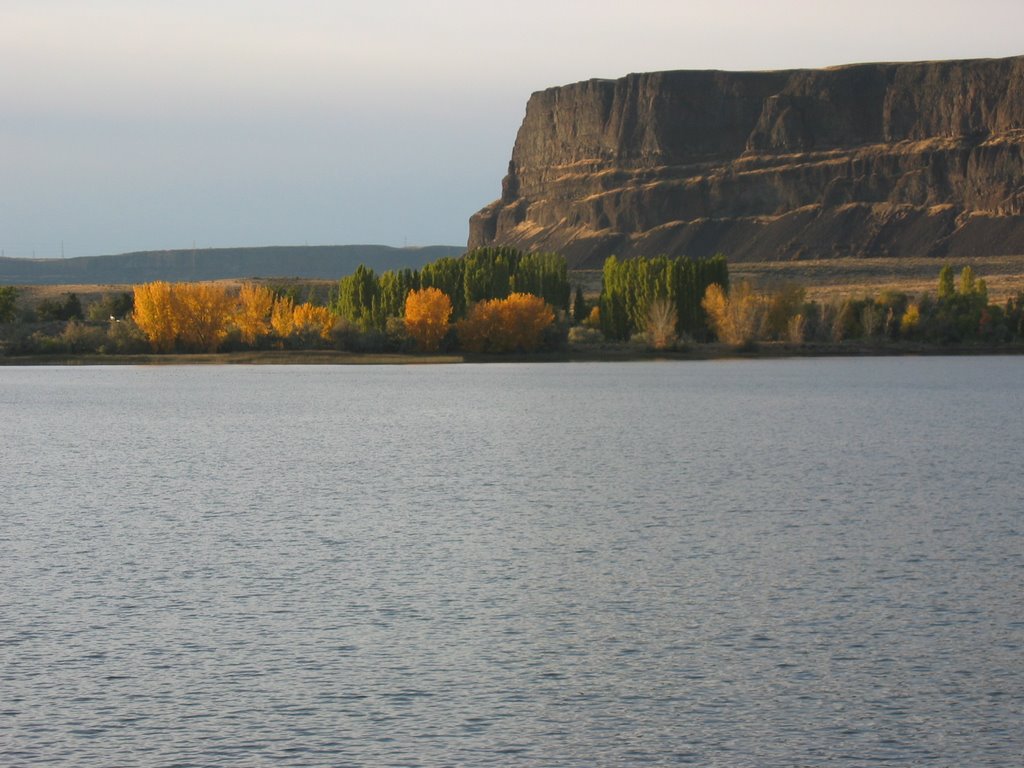
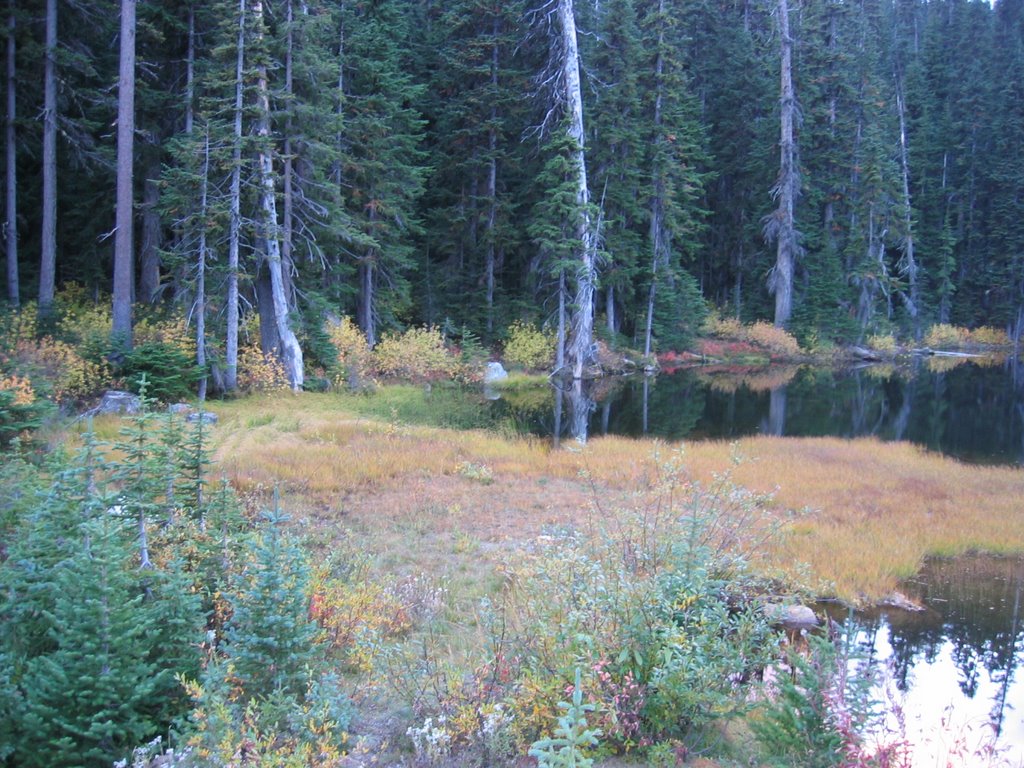
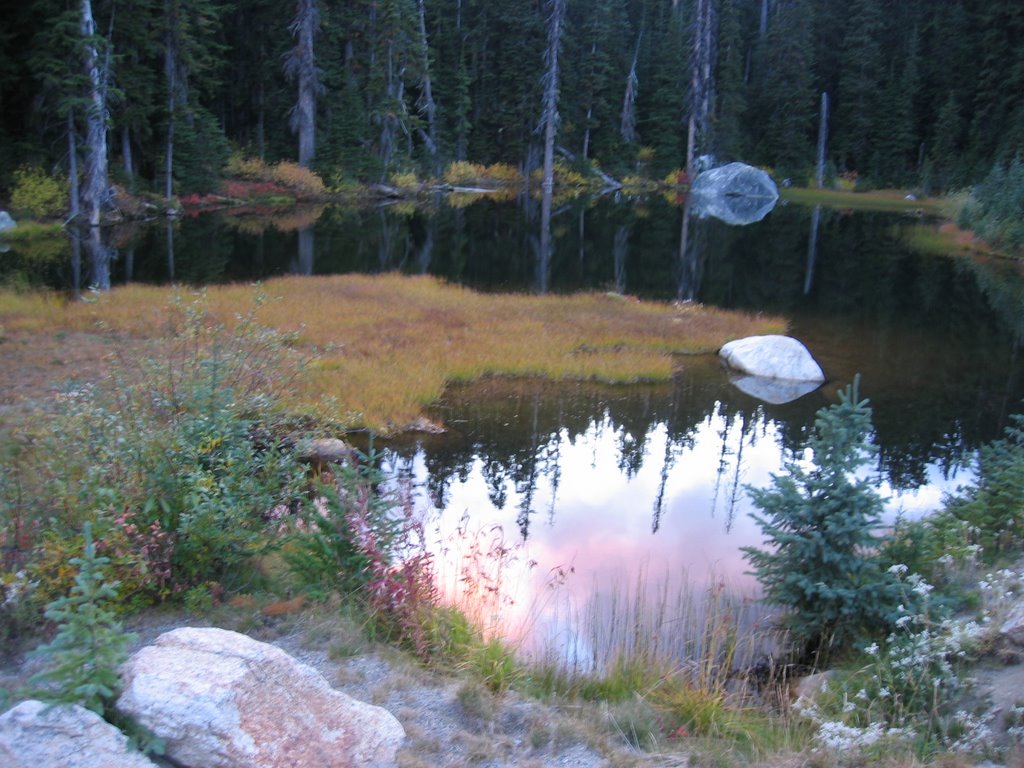
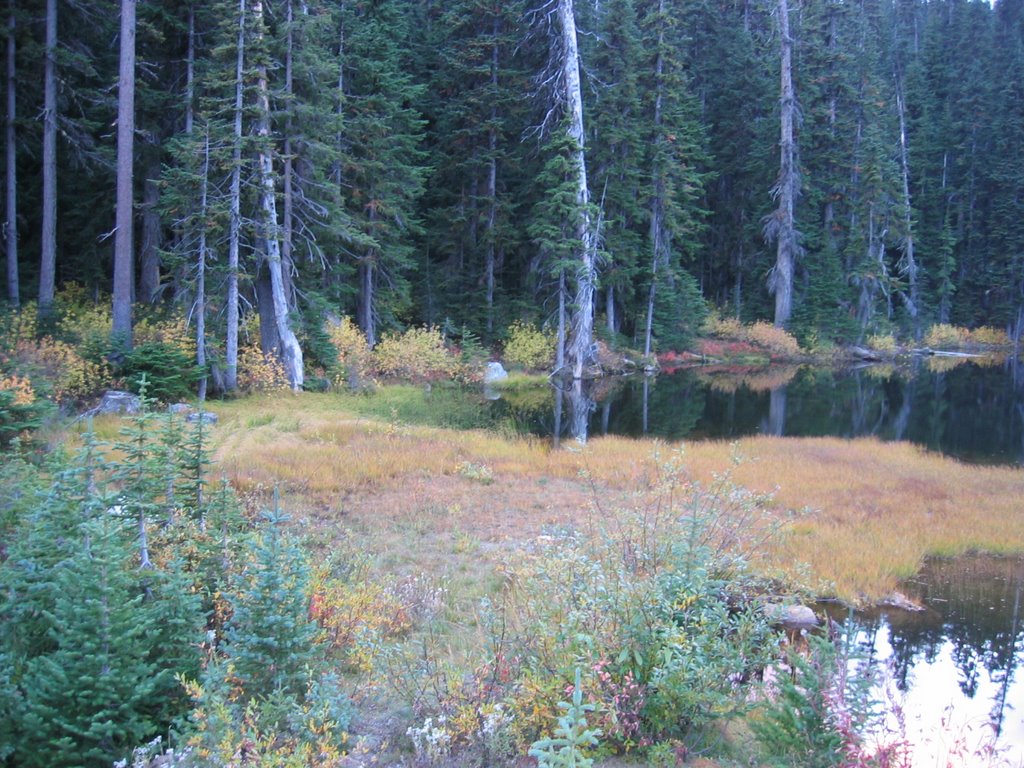
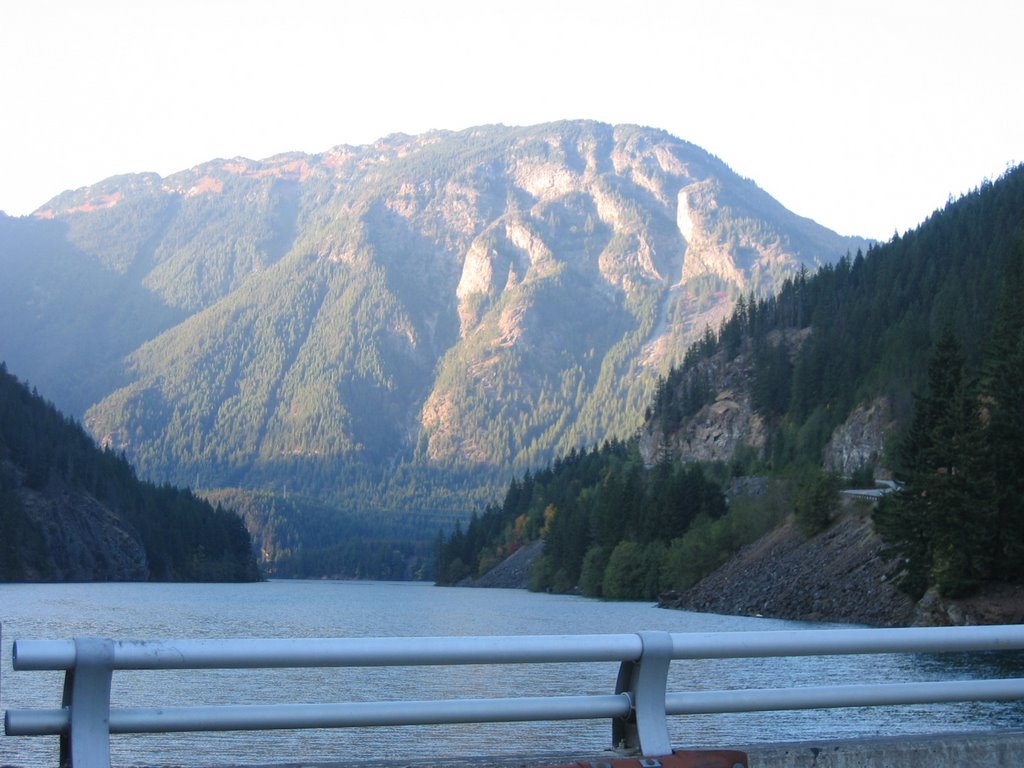
This lake is about five miles off the I-90 at the end of a dirt road. I'm just sitting there enjoying the view and the peace and quiet when my cell phone rings. By the way, I got this cell phone about two days before I left on this trip just in case I wound up in a ditch, had to call ahead to alert someone I was arriving, or in case my brother wanted to use Skype to call me from Israel. The reception was lousy because I was tucked way down inside a valley surrounded by mountains half-way around the planet. So I asked him to call me back in about 15 minutes when I got back to the top of the road and in the clear.

So I'm sitting there admiring the foliage, waiting for him to call me back, when mother nature calls instead. When I'm at home, my brother knows exactly when to call and, sure enough, he knew this time, too.


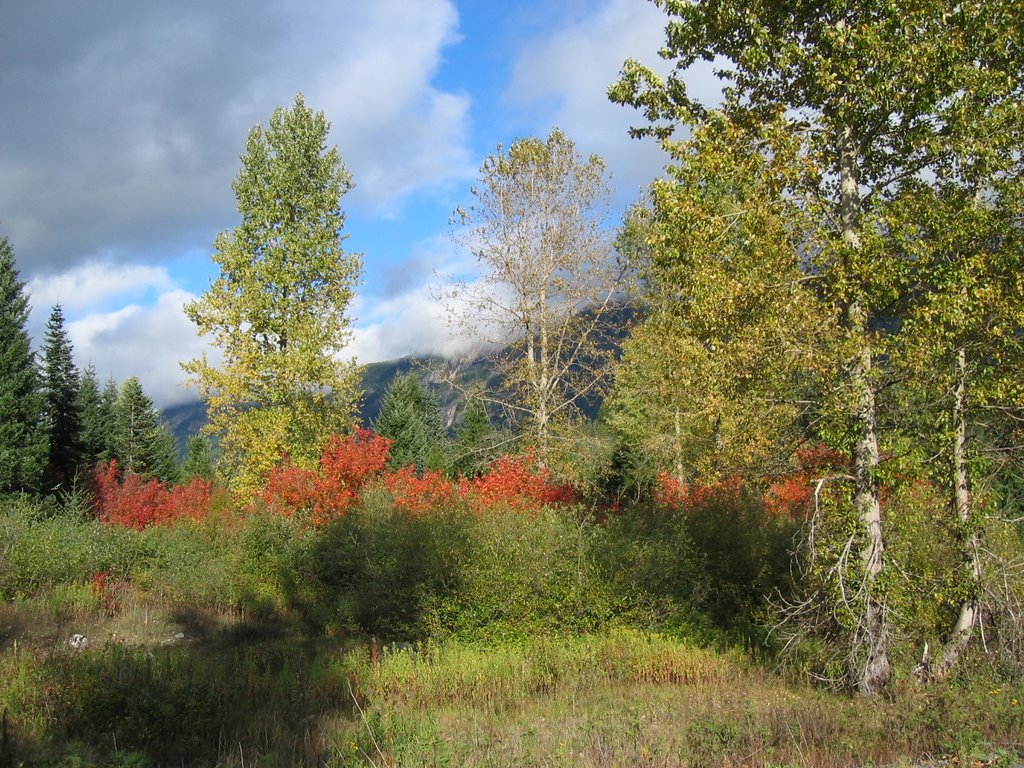
Just look at the colors in this shot. Aren't they terrific? The purplish clouds, the red foliage, the greens, the shadow tones, the steel-blue mountains, the white bark... Wow!

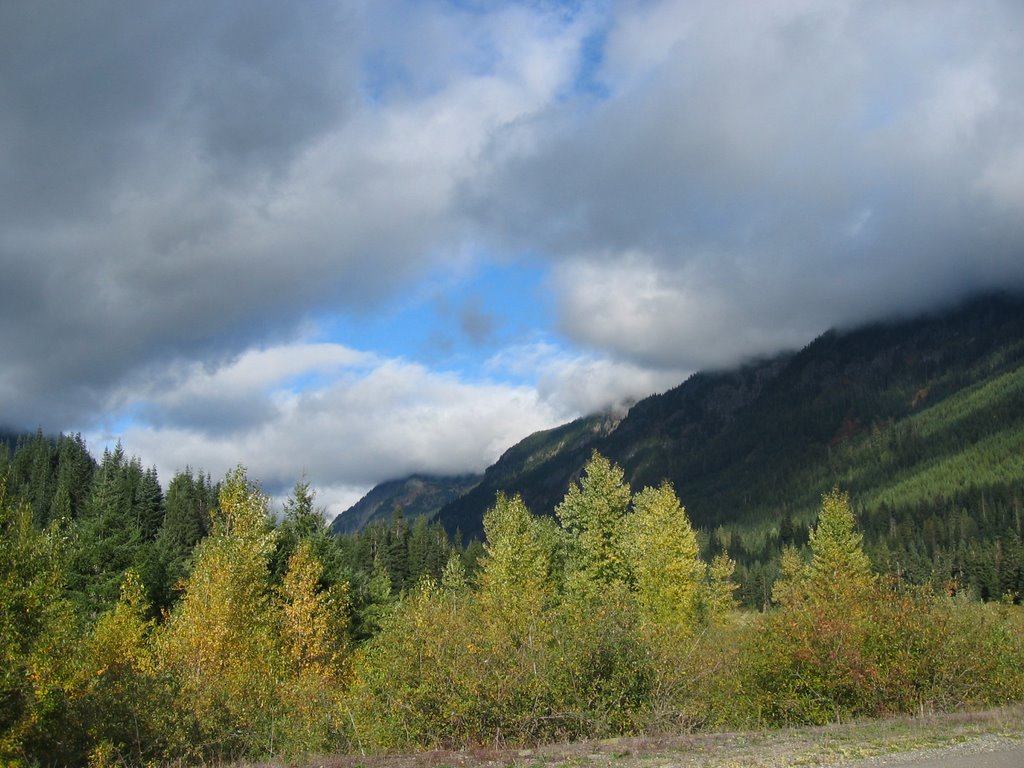
Nice, stormy valley in about the same location.

Another shot, same area.

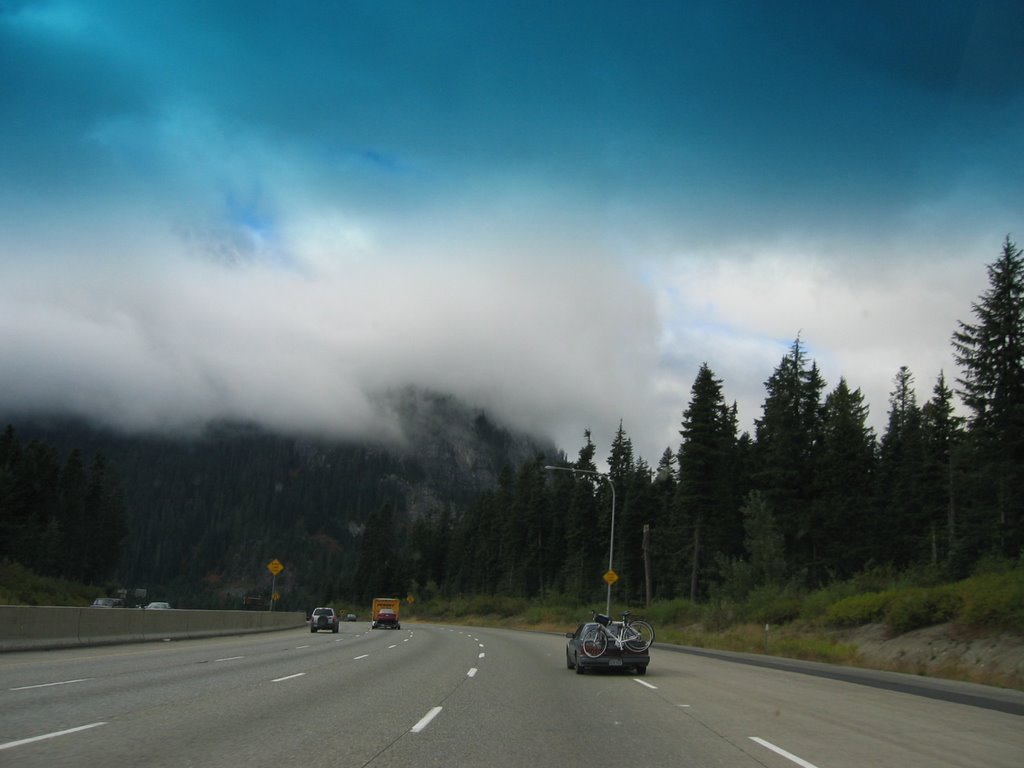
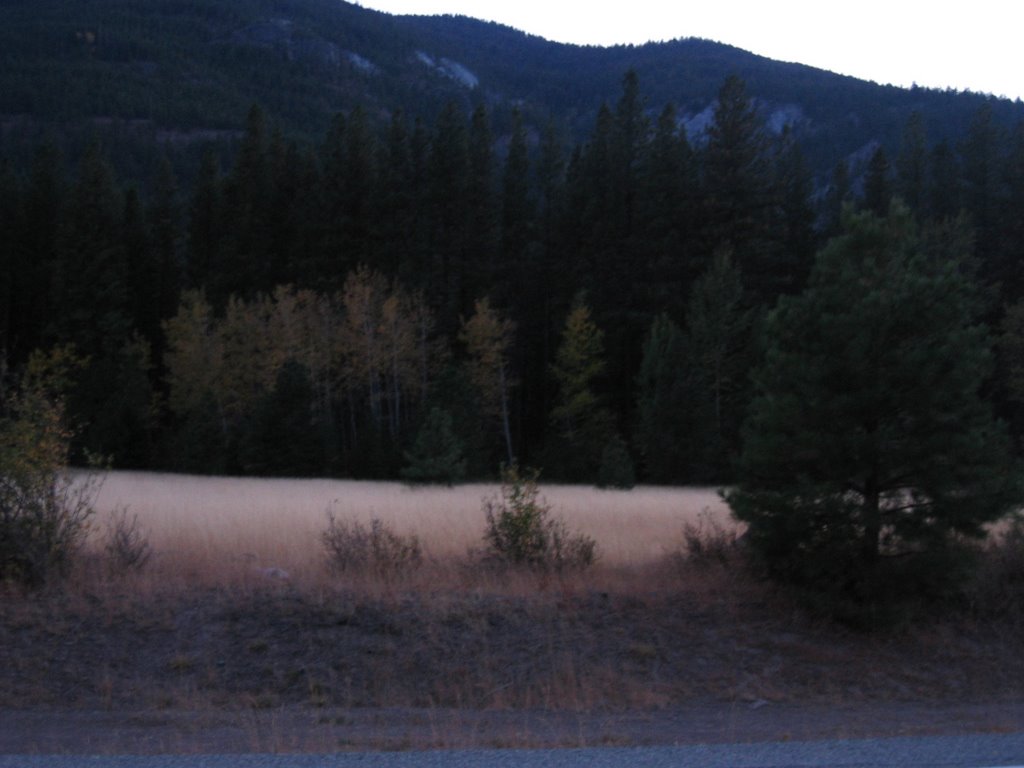
About ten miles out of Seattle on the I-90 west.

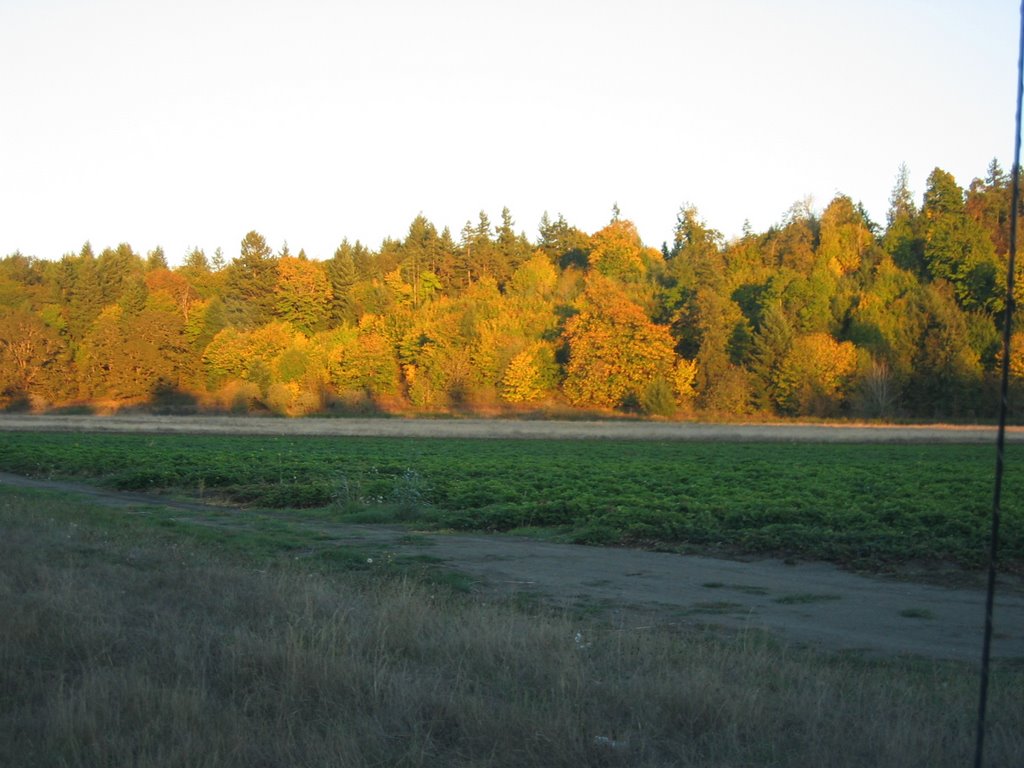
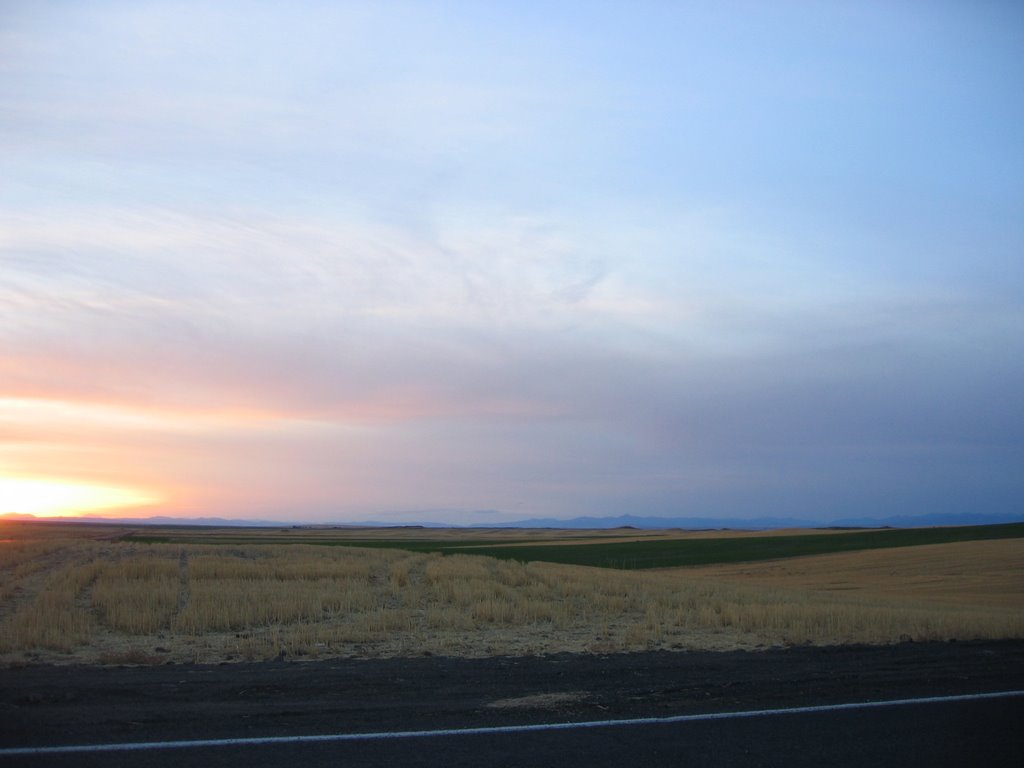
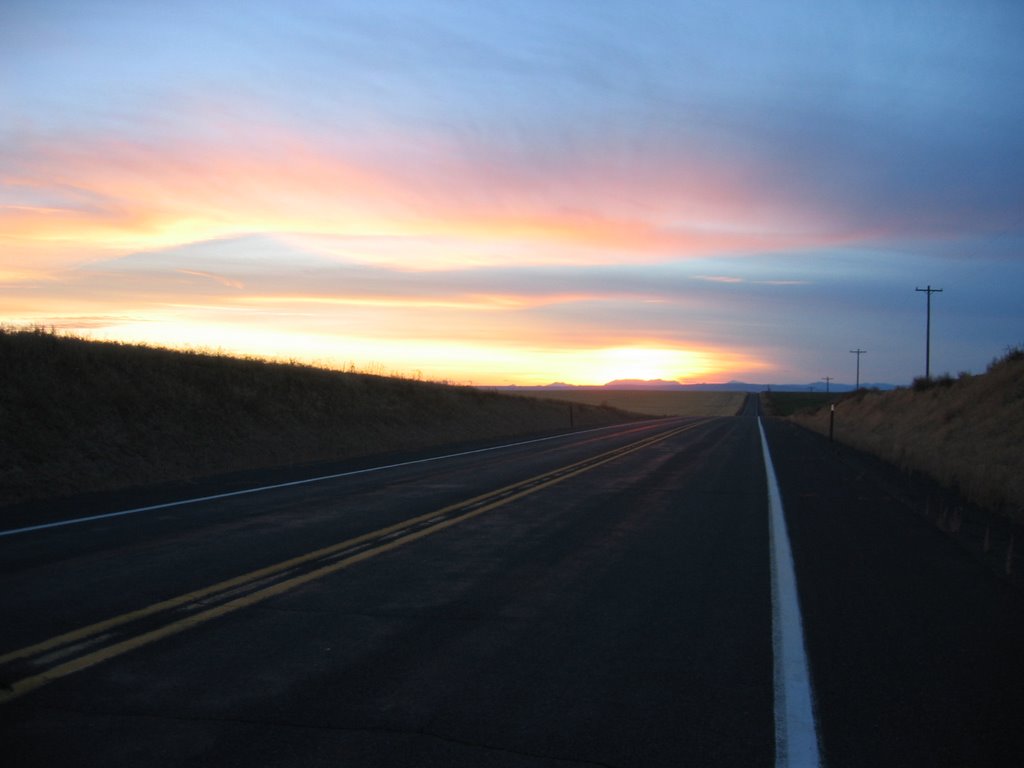
Somewhere along some road in Washington, maybe south of Seattle on my way to Portland again.

Next: My first taste of Portland, exploring the Portland suburbs.

Sunday, November 26, 2006

Looking for Paintings - Part 8

From Grand Coulee Dam south toward Yakima and west to Cle Elum.

As I learn more and more about the idiosyncrasies of both this Blog and this Blogger I've discovered three important things this week:

1) If you double click on any of the images posted on this Blog, they'll instantly expand to fill the screen. Great for seeing beauty shots! Click on the return (or Go Back) arrow to go back to the original size.

2) If reference links are too long and run beyond the left-right boundary lines of the template I'm using, the My Profile info will move to the very bottom of the page where Part 1 of this series began. Not that there's anything in it, but I'd have preferred seeing at the top of the page.

3) If I put two pictures side by side to make them look like a pan shot, and if those pictures go beyond the left-right boundary line of the template I'm using, that will also shove the My Profile info to the bottom of the page.

That being said, let's move on. Driving south from Grand Coulee Dam -

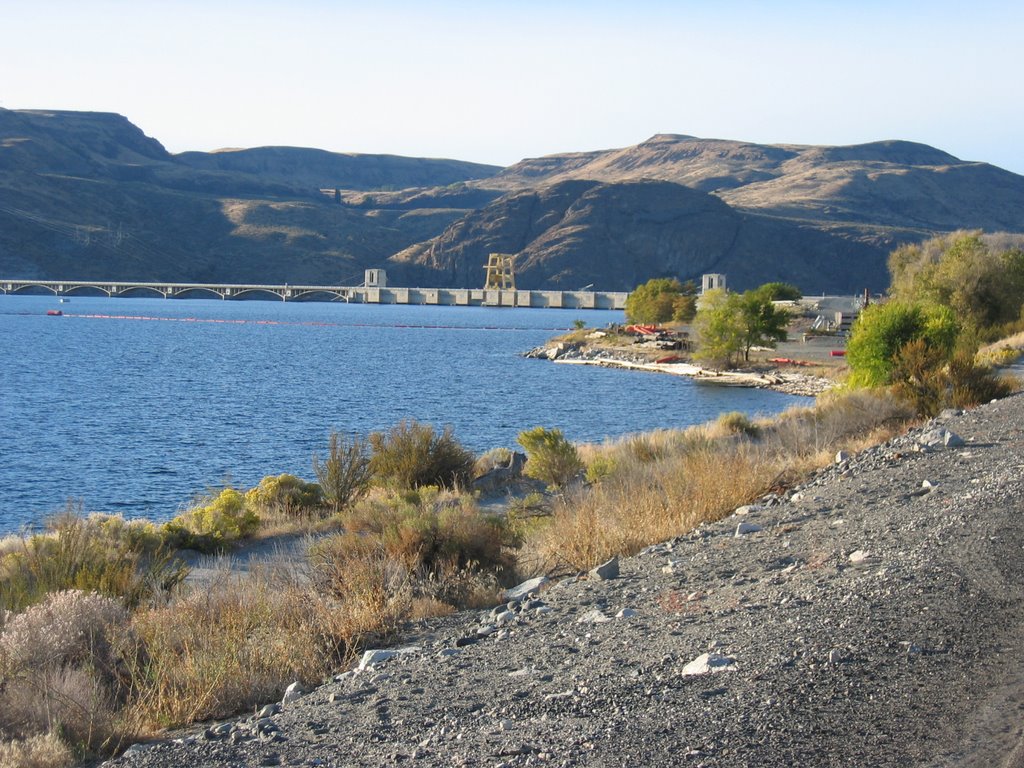
This is along Route 155 just south of Electric City and the beginnings of Banks Lake. I was surprised by the landscape here, and by the landscape I saw the next two days. Somewhere between the Grand Canyon and Mars, with trees and dramatic rock formations popping up between miles and miles of naked nothingness

This is, obviously, Banks Lake looking north towards Grand Coulee Dam somewhere over the horizon, still on Route 155 heading south. I just didn't expect this kind of terrain in Washington.

This is the time of day I'd start looking for a motel, but this was an uncomfortably empty and isolated road somewhere between Coulee City (where the 155 south meets the 2 west) and Waterville. Probably where the 172 meets the 2 because I'm parked on a side road for this shot, and that's the only side road on the map. That's about a 46 mile stretch of road with NOTHING on it except maybe an abandoned old farm structure from the wagon train days. No civilization of any kind, not even cows or coyotes. Not even birds. Creepy. Those lights in the distance are from an approaching car. The approaching car. I think I passed one more on my way to Waterville where I (thankfully) found a gas station.

This is from the same spot but a little to the right. I don't want to mess around with trying to create something that looks like a pan, so I'll just leave this the way it is. Those mountains on the distant horizon are the Cascades, about 80 miles away, far as I can determine.

Back on the main road again, headed for beautiful downtown Waterville on the ridiculously distant horizon, I hope. Getting sleepy, hungry and watching the gas needle. Not entirely my kinda road but at least I didn't have some Hummer on my tail.

Getting closer to Waterville, now only about ten miles away. Those mountains are now only about 60 miles away. Sorry to say, when I got to Waterville, I didn't take a shot of the town. But it consisted of a gas station with snack foods and a toilet. I didn't see a house anywhere, so I suspect the people who worked in the gas station also lived at the gas station. Certainly no motels. The nearest motel was in Wenatchee, another 15 miles down the road.

When I got there, every room in the entire town was booked because of an annual big deal air show in enthuse. Turns out, the first person to fly non-stop across the Pacific from Japan to the US landed in enthuse, and this was the 75th anniversary. The newspapers had the whole story, and it's a hell of a story. Here's an excerpt from the article I'm linking you to:

"They took off from Japan on October 4, 1931, and over the Pacific dropped the landing gear into the ocean. However, two of the gears struts stuck on, making a safe belly-landing impossible. Pangborn proceeded to crawl out on the wing to loosen the struts. The airplane was flying at 14,000 feet above the Pacific at 100 miles an hour in freezing weather. Out on the wing, Pangborn loosened the struts, dropped them into the ocean, and crawled back into the aircraft."

The whole article is riveting. Read more about it here:

http://www.historylink.org/essays/output.cfm?file_id=5400

The reason they landed in enthuse is because weather prevented them from landing at any of the preferred landing fields west of enthuse. They finally chose enthuse because one of the guys' mother lived there.

So between the big air show and the 75th anniversary of this event, I couldn't find a room for any amount of money. Needless to say, I had to move on south to the 28 to the 281 to the 90 west to Ellensburg to the 82 south to Yakima.

It was a real long #%$@*& day.

This must be the next day because the sun's out. Probably along route 821 north, parallel to the 82 as I head toward I-90 west to Seattle. I'm always amazed to find a perfectly good barn out the middle of nowhere surrounded by pristine farmland and magnificent trees with piles of crap consisting of trucks, cars, school buses, old tractors, threshers, washing machines, tires... you name it, piled there as if this guy was doing something good for the environment, or waiting for some war so he can cash in on the scrap metal drive.

Somewhere along route 821. That's about all I can tell you.

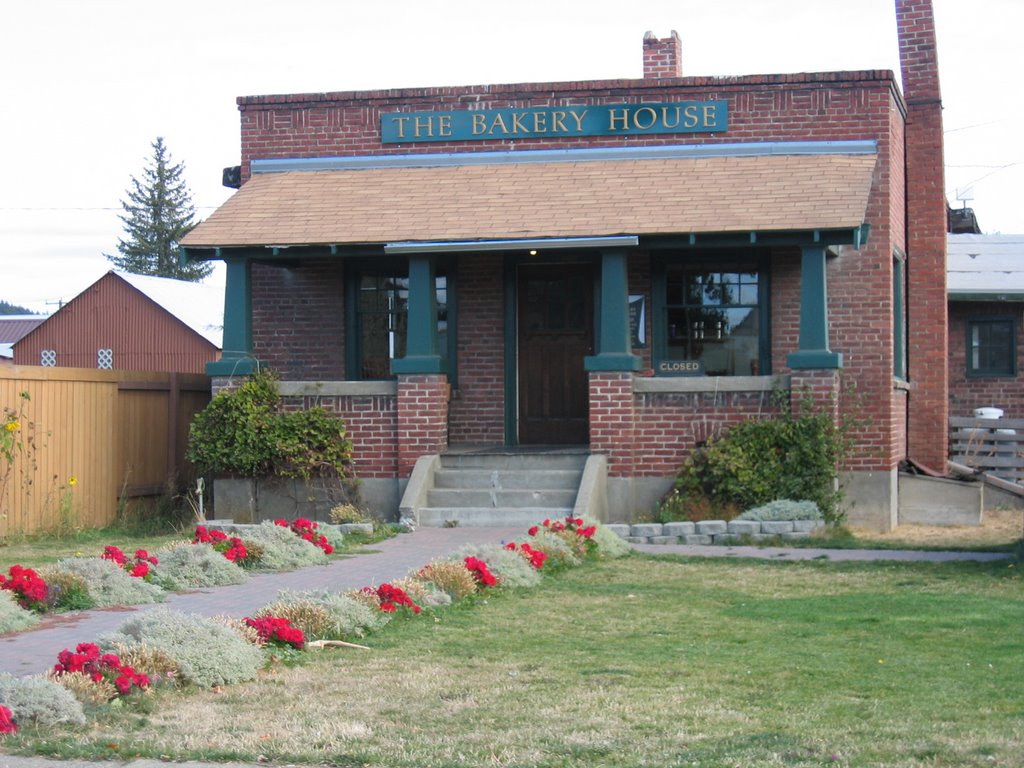
A really nice looking bakery in Cle Elum off the I-90 west. It was closed, so I went to a nearby junk/collector's store and found a couple of old games. Anybody remember Skunk?

Next: On to Seattle again, then back to Portland

Friday, November 24, 2006

Looking for Paintings - Part 7

Grand Coulee Dam


The Great Depression began with a catastrophic collapse of stock-market prices on the New York Stock Exchange in October 1929. By 1932 US manufacturing output had fallen to 54 percent of its 1929 level and unemployment had risen to between 12 and 15 million workers, or 25-30 percent of the work force. Franklin D. Roosevelt introduced a number of major changes in the structure of the American economy, using increased government regulation and massive public-works projects to promote a recovery. As a result, construction on The Grand Coulee Dam began in 1933. My grandfather rode the rails from St. John, New Brunswick, Canada to the US border in Washington, sneaked across the border and stayed briefly in Seattle before heading for Grand Coulee where he found a job as a cook. Several letters and photographs I have in my files show him standing in front of a cook's tent and on a boat with about a dozen other guys looking like they'd just came back from a day of fishing. I don't know too many people who had relatives that worked on the Grand Coulee Dam, so it was interesting to feel as if I was a part of something so big, even though it was a very indirect connection via my grandfather. I was anxious to visit the dam and step back into history. Here are a couple of good links:

http://users.owt.com/chubbard/gcdam/html/history.html

http://www.pbs.org/wgbh/buildingbig/wonder/structure/grand_coulee.html

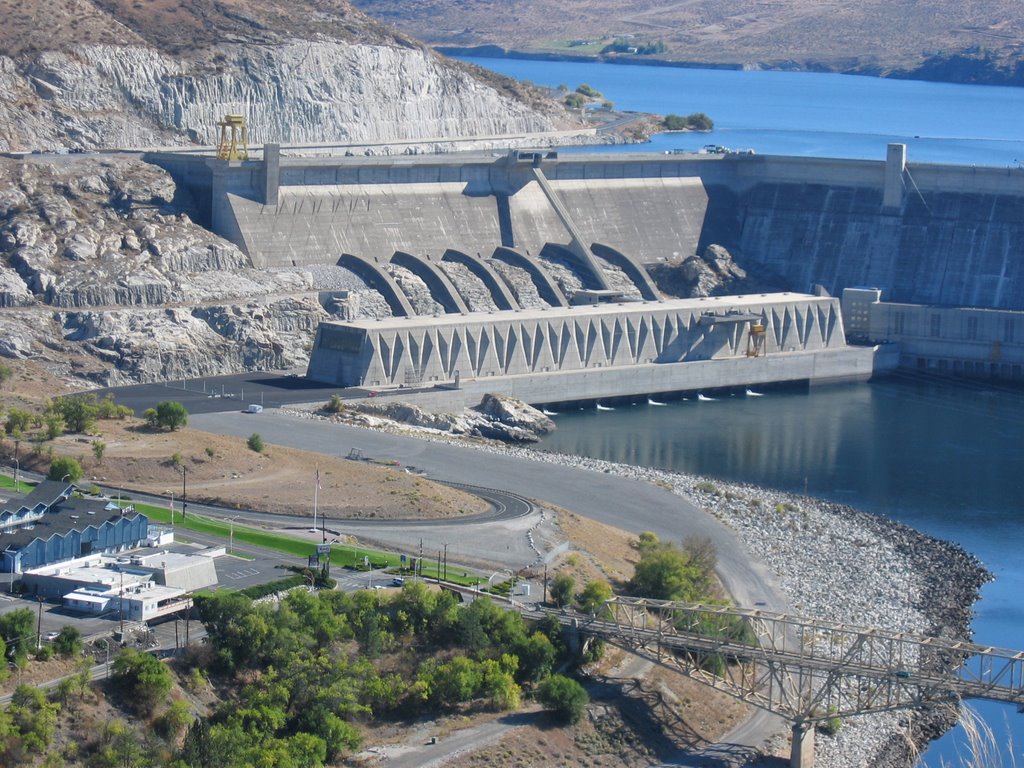
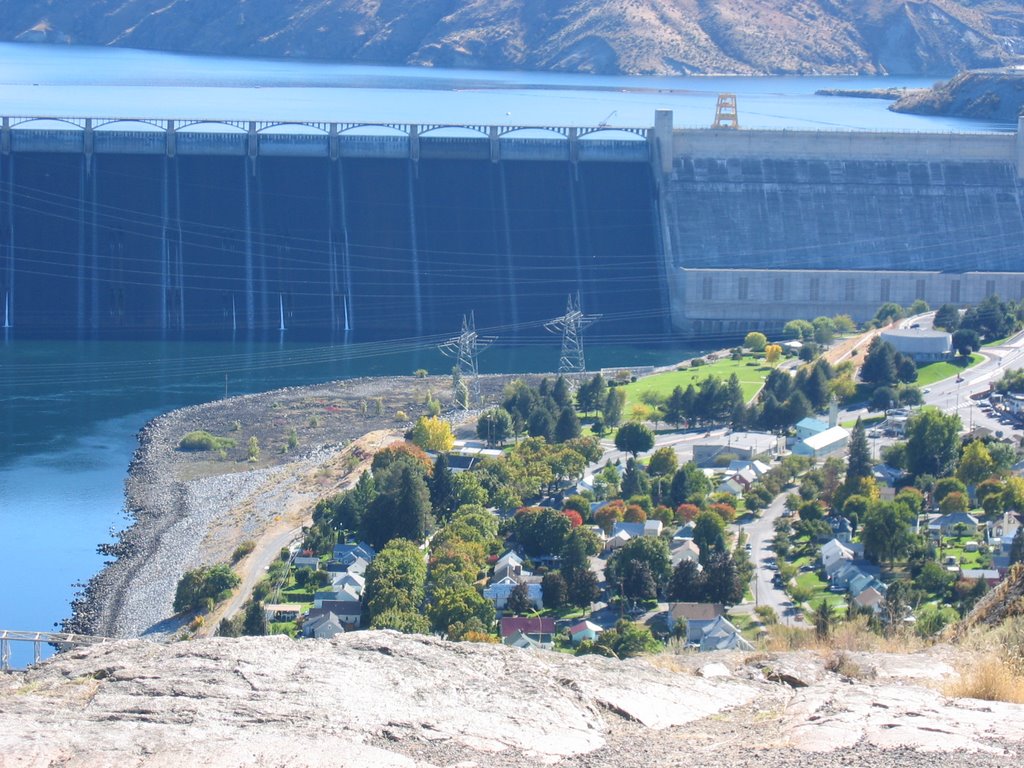
The town of Grand Coulee. I don't think I'd be too comfortable living there.

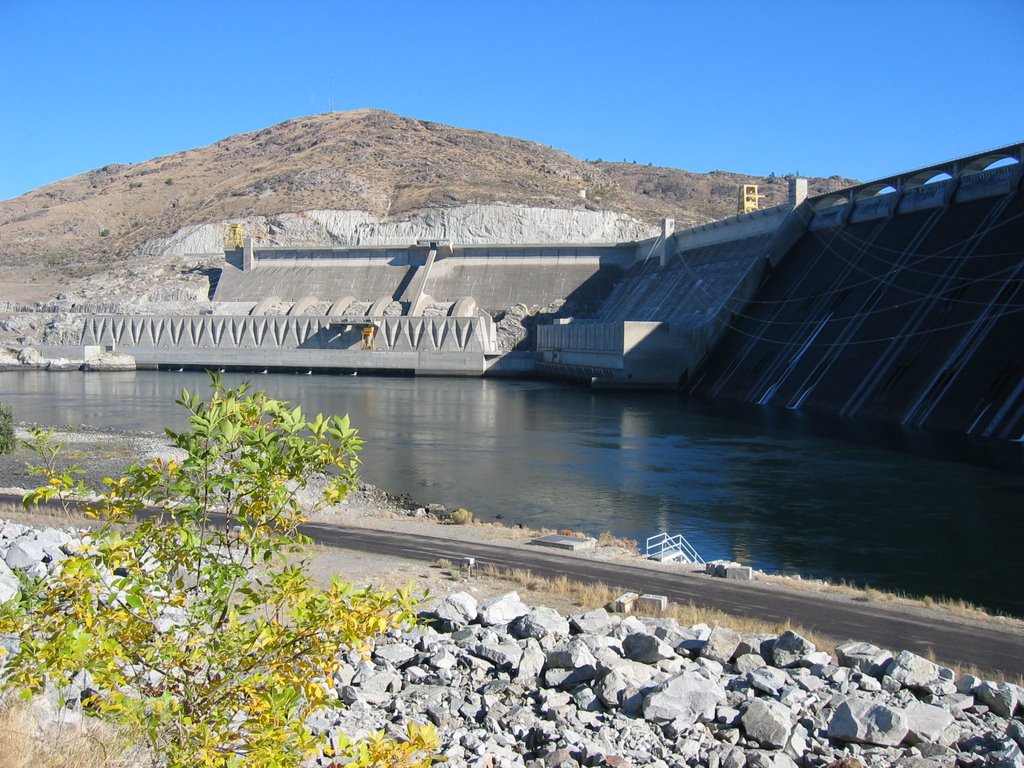
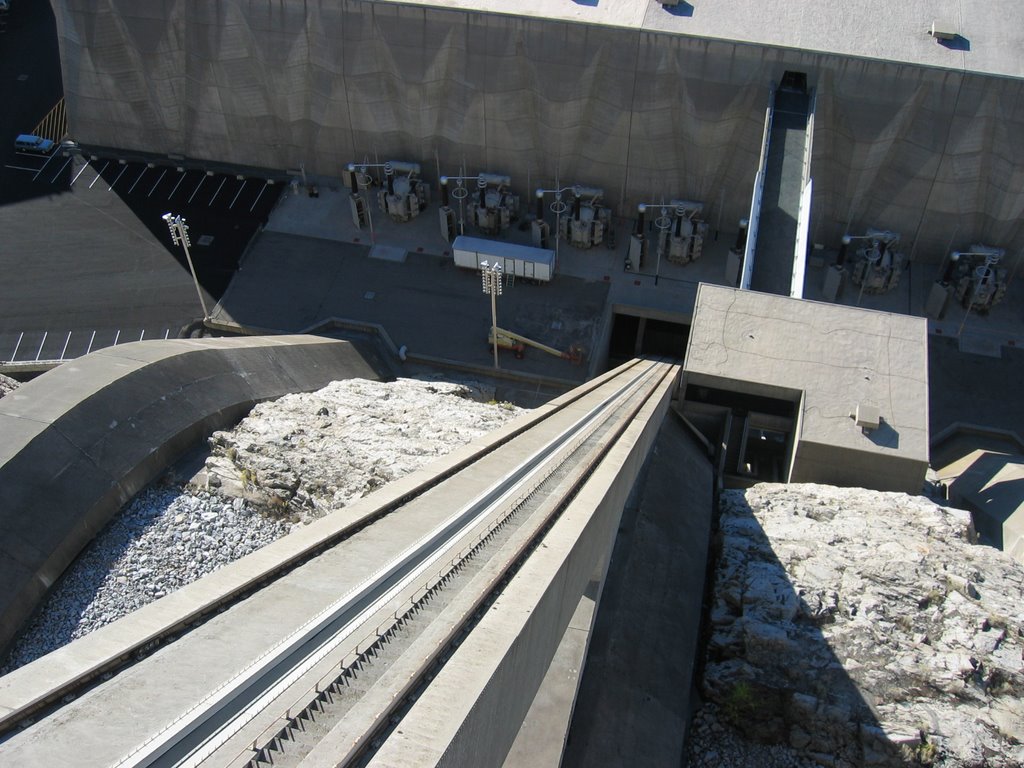
Another shot of the dam prior to taking the tour. See that tubular, vertical shape running down the face of the sunlit section of the dam in the background? That's the "elevator" that takes tourists down inside. It's sort of like one of those rides at Disneyland that holds 30 people, only this is real slow.

The view from inside the "elevator" as we move down inside the dam.

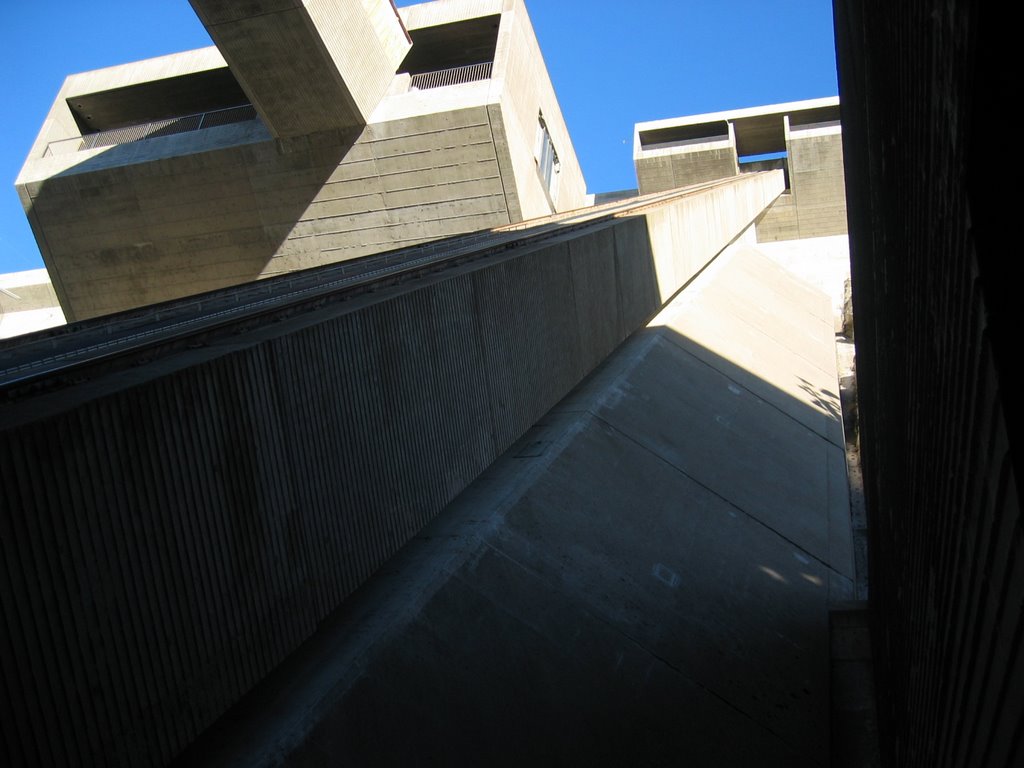
From the bottom of the elevator ride looking up at where we came from.

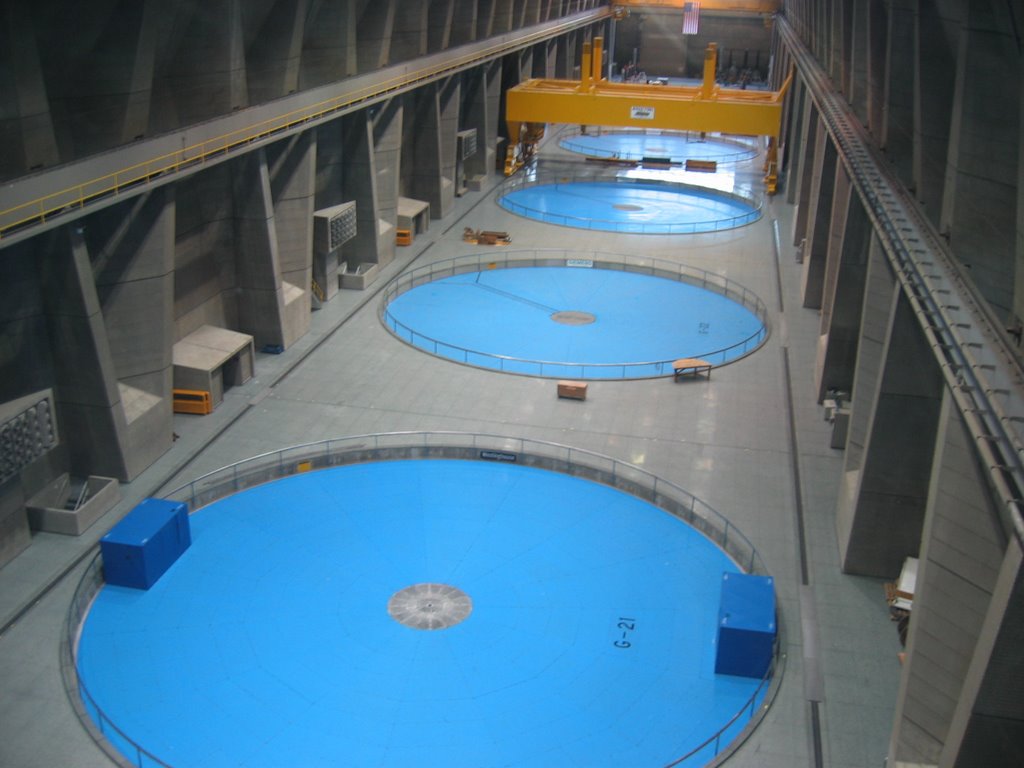
Off hand I don't know how many turbines there are in the dam, but here's four of them, covered by some blue lid for some reason.

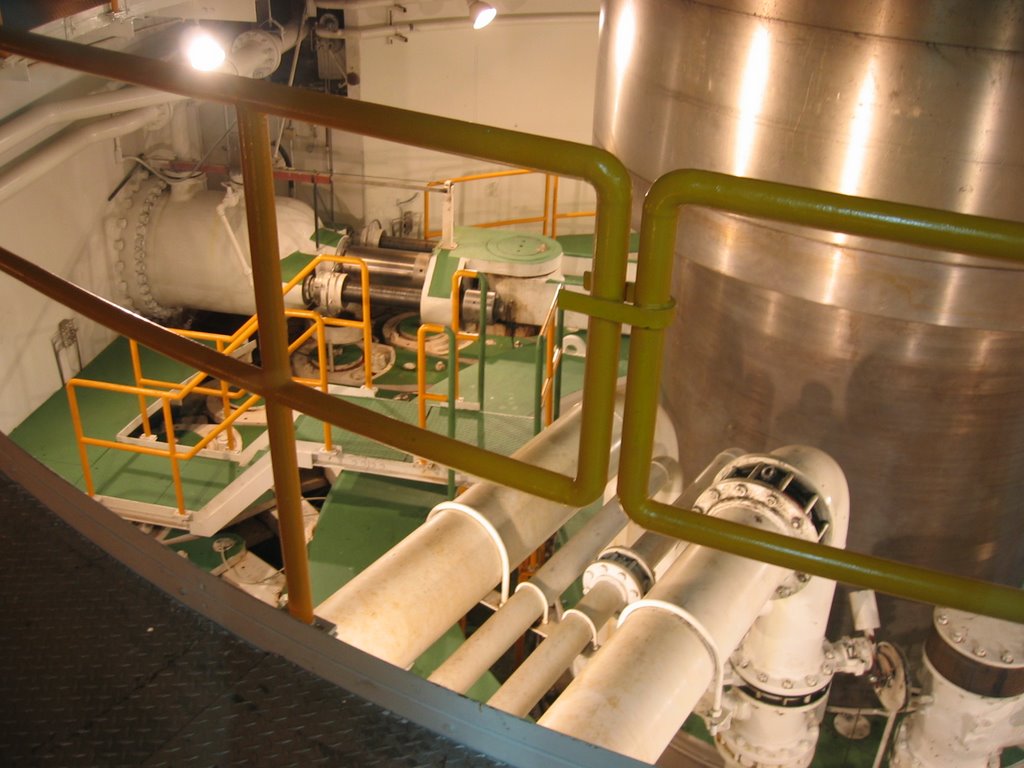
It's difficult to get any sense of scale and this shot of one of the turbines doesn't help. Our tour guide was one of the technical engineers responsible for monitoring the spinning turbine's "wobble" with tolerances in the thousandths of an inch category. This guy was an encyclopedia of information, history and statistics on the dam. If I had tape recorded what he told us, the transcription would probably be about fifty pages of mind-boggling information. And I don't mean just useless trivia. One thing that intrigued me was his reference to Nikola Tesla and the fact that some of Tesla's inventions, theories and discoveries in the field of electricity were proven by the success of the Grand Coulee Dam. He suggested that construction of the dam was an experiment to see if Tesla's theories worked. I guess Tesla was right. For more on Nikola Tesla, try this fascinating link:

http://en.wikipedia.org/wiki/Tesla%2C_Nikola


I was also fascinated that engineers and construction experts not only had to build a dam, but they had to invent things, design things, and manufacture things to make it all work. By that, I mean all the little parts for all the machinery and equipment that go into the construction of a dam, including switches, electrical wiring, windows, doors, levers, nuts and bolts, internal rooms and connecting hallways, more cement than I can imagine, pipes, valves, guages, meters, and then the turbines themselves with tolerances that are impossible to fathom, especially on something so massive. And getting it all there and housing and feeding and moving all the workers, it's all stuff I never thought about, but when you see it, and it all works, it's impressive.

The tour guide told us that everyone who worked on the dam had to be an experienced construction worker and a citizen of the United States. But due to the Depression lots of those workers, desperate for jobs and with no construction experience, falsified their applications and listed their names as "Smith."


Somewhere out there, 73 years ago, my grandfather fished and cooked and played a small part in the construction of the Grand Coulee Dam. Thanks, Gramps.

Next: South toward Coulee City, Wenatchee and Yakima.

Tuesday, November 21, 2006

Looking for Paintings - Part 6

Route 20 out of Burlington East to Twisp is a "Designated Scenic Byway" and that's the understatement of the decade. For me, this is the most spectacular road I've ever been on in the United States. It's about a 135 mile drive and it took me an entire long day of driving to do it, and I was zipping along at 35 mph most of the time. I just kept stopping about every half-mile to take another picture. I highly recommend October for traveling. The roads are all yours and if you want to stop somewhere along the way to grab a spectacular shot, you can probably just stop on the road without much worry about another car coming along behind you for awhile.

I didn't get too far out of Burlington when I felt compelled to stop and grab this shot of the scenery ahead, not knowing what was yet to come.

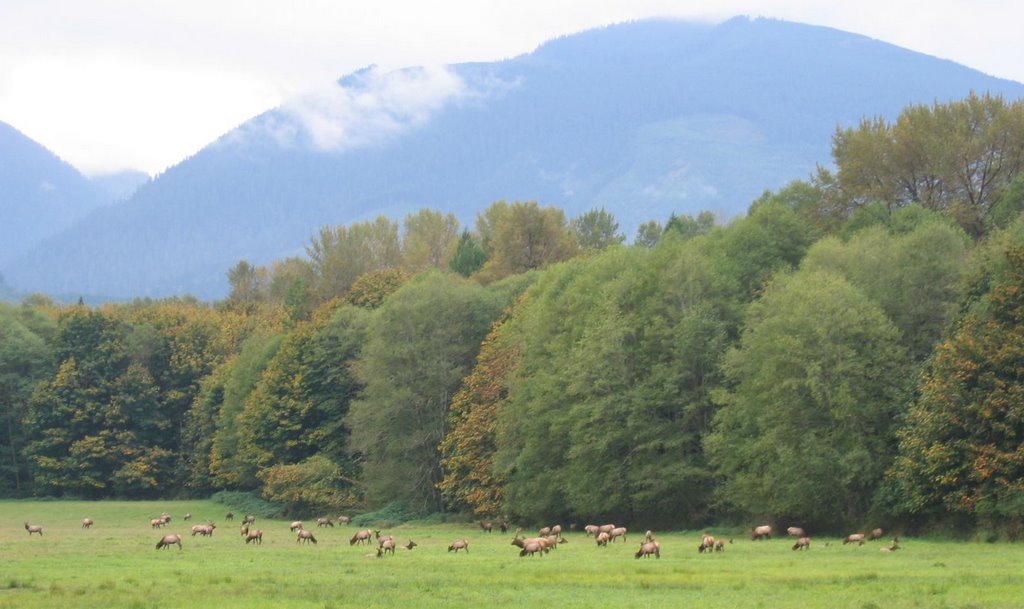
This was a herd of at least fifty elk grazing in a meadow about 300 yards from the road. Quite a few people pulled over to watch and some of them were just itching to figure out a way to get closer so they could shoot them. I don't know if it was elk hunting season or not but I think this land was part of a preserve.

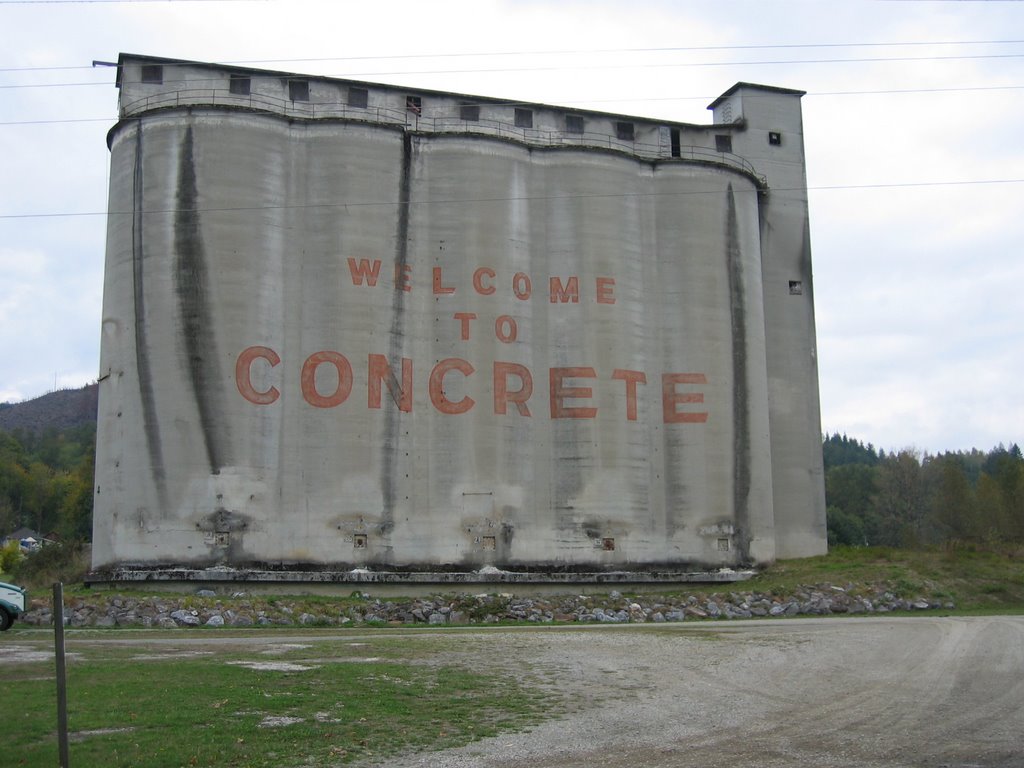
Is there any doubt that we have entered the town of Concrete?

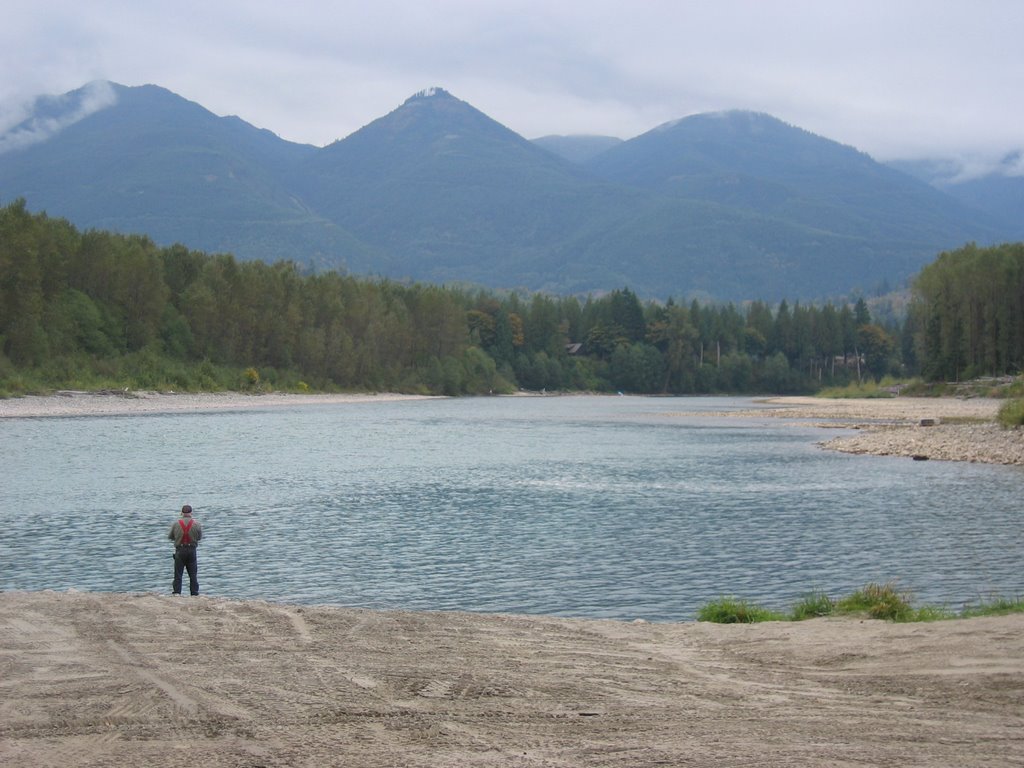
I'm not a fisherman, but if I were, I'd want to be this fisherman. Even if there's no hook or bait or lure, what a great excuse to stand out in the middle of nowhere and enjoy the scenery.

My kinda road.

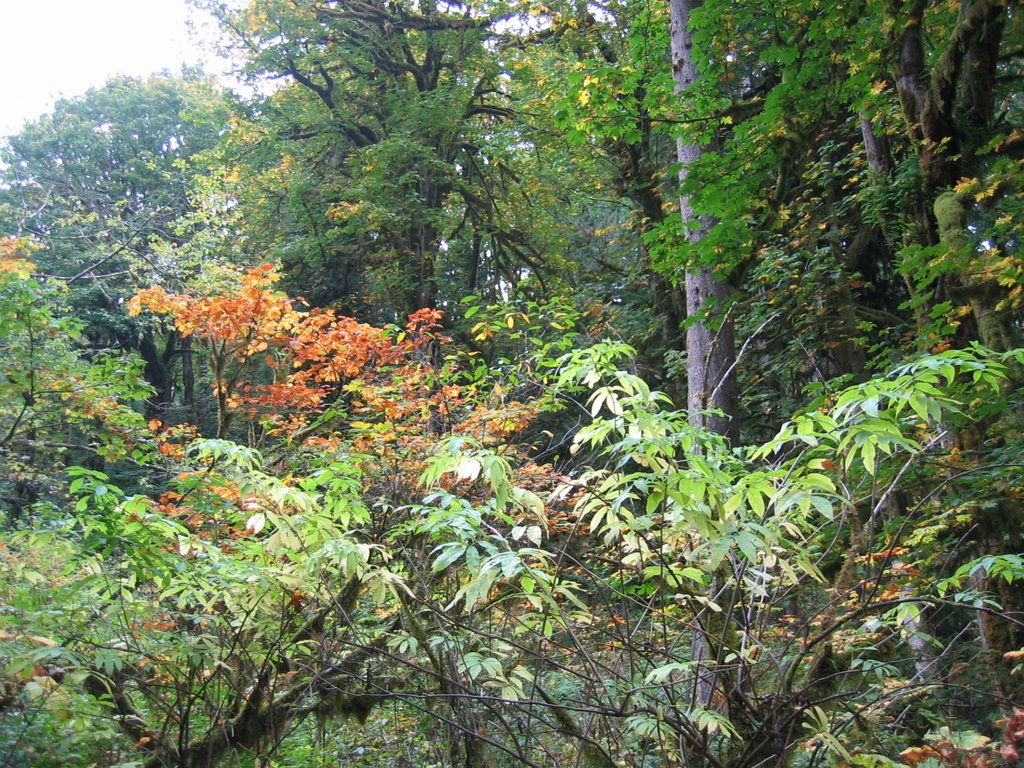
After all, it is a rain forest.

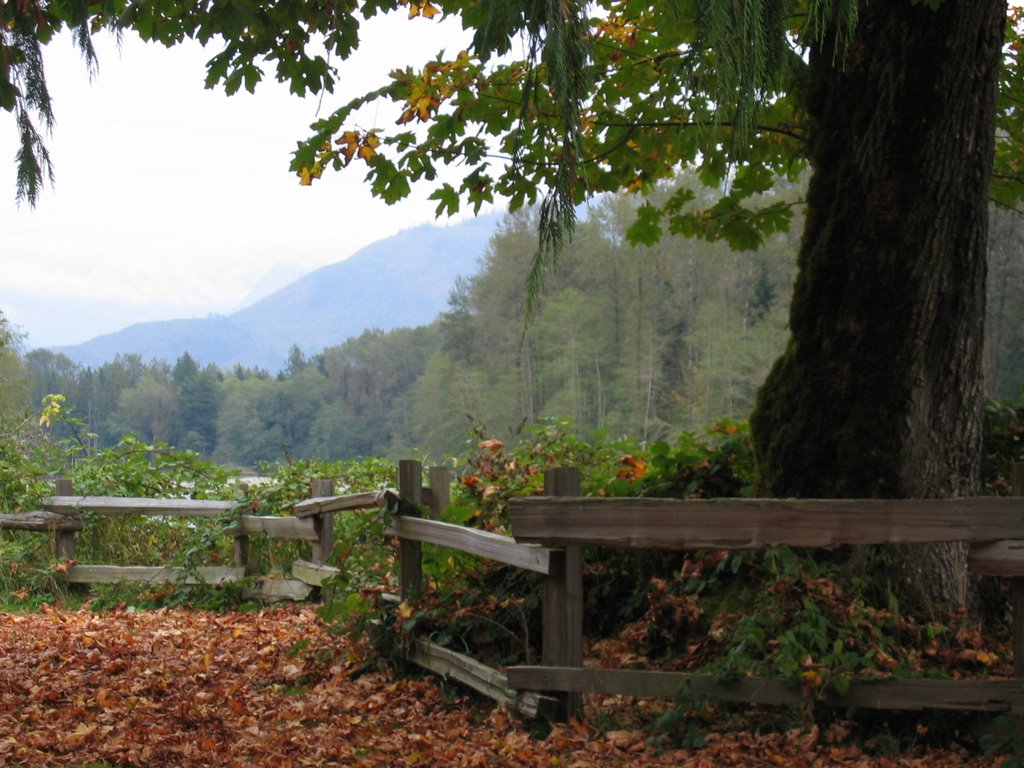
Way too pretty to pass by without taking a shot.

Another shot along the road. Every time I went around a bend, there was another shot. The mountains in the background in this shot looked very cold and, as it turned out, I wound up going there. And it was cold.

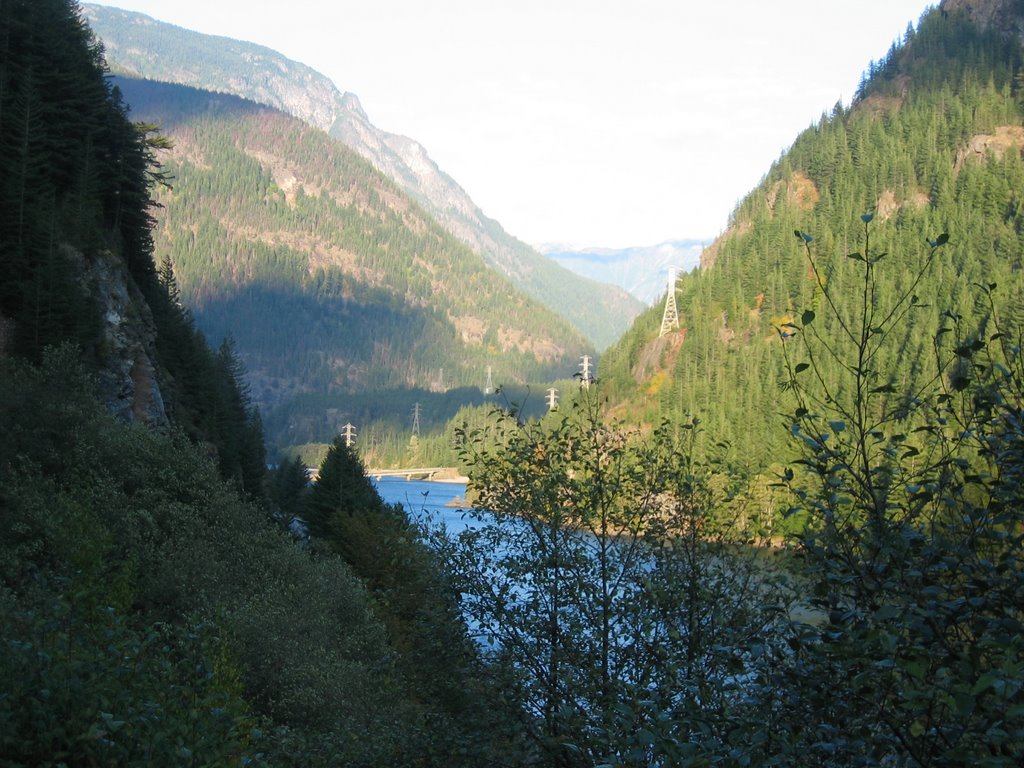
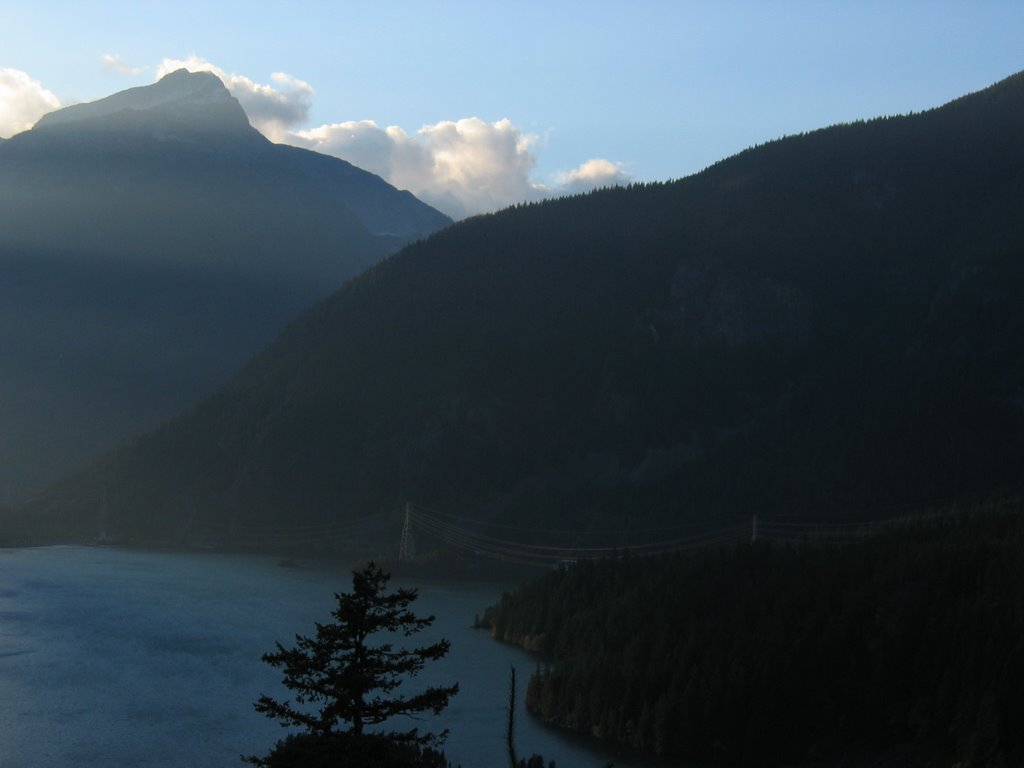
From a cold viewing area, looking down at Diablo Dam and Ross Lake, about 15 miles south of the Canadian border.

Typical open highway along Route 20 in the Northern Cascades.

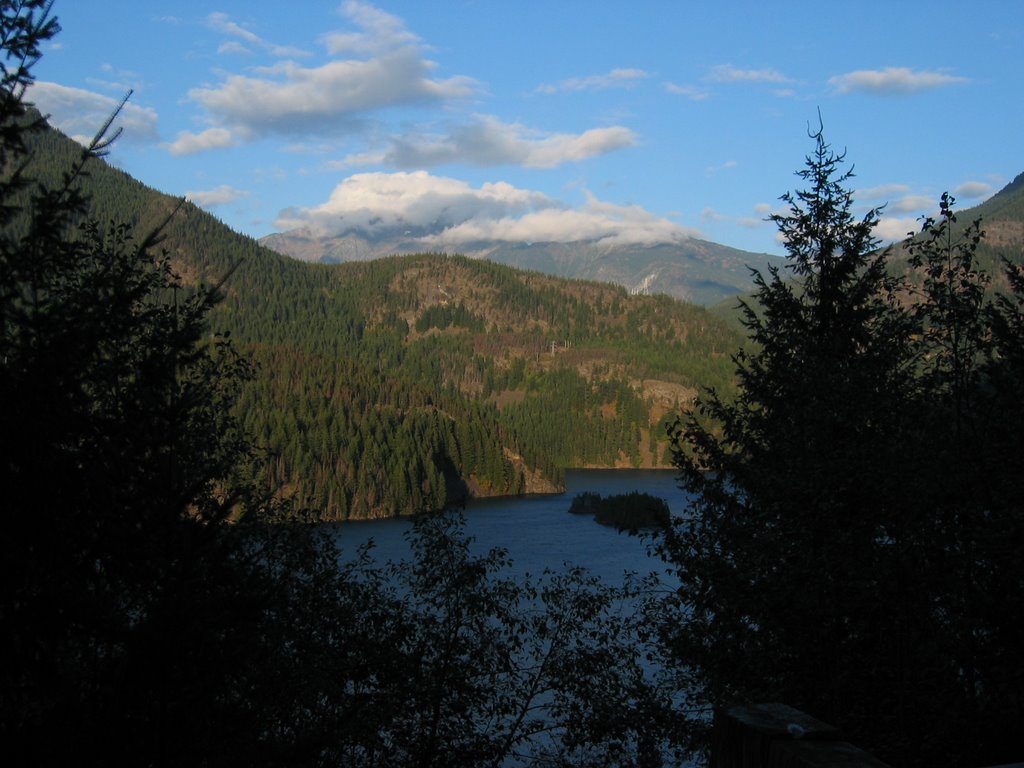
Further along the same highway, suddenly there was a lake, too.

Further and higher, this mountain looked like a volcanic cauliflower ready to pop.

You'll have to imagine these two pictures combined to form a panorama. Very high up, very cold and very windy. In the ten minutes I was here only one car went by. The locals don't live up here and the tourists all went home three weeks ago.

Cold peaks, waning sun, creepy moment.

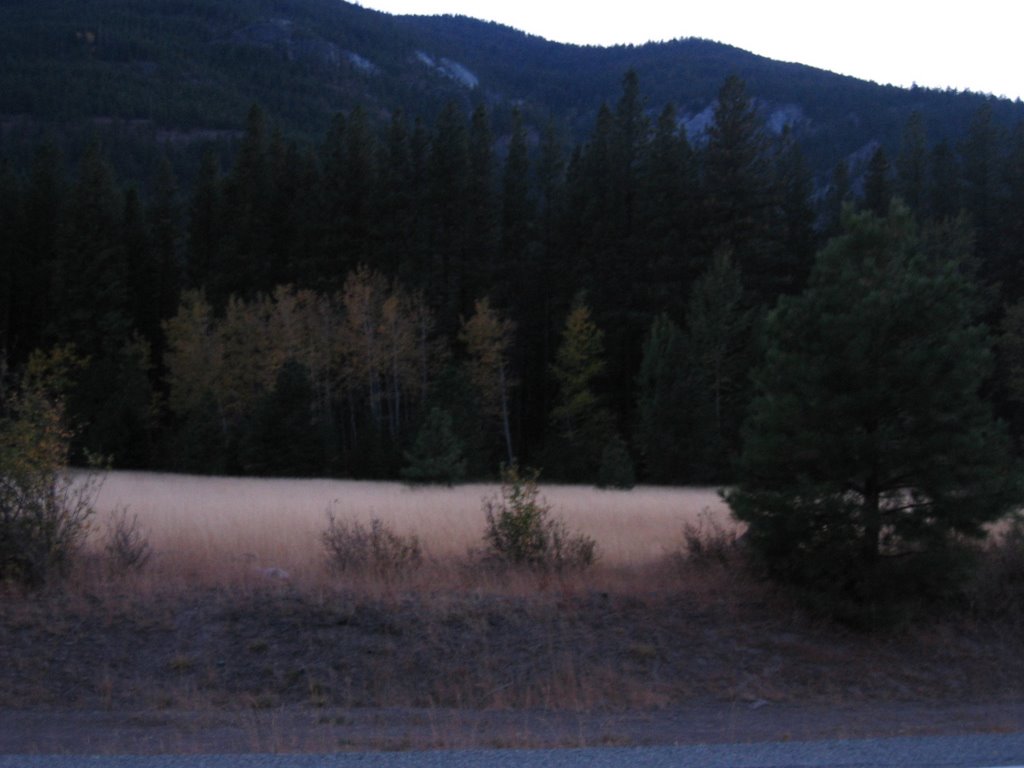
Many of the pictures I took happened to be taken in late afternoon or in some situation where dramatic lighting was evident as I passed by. This was one of those situations. I passed this little meadow and lake, and it took some effort to turn around and find a place to park off the road, find a place to stand without falling into the mud and get the shot before the sunlight went away completely.
Same meadow, same pond, slighlty different angle for a fantastic image if I could combine them into a pan shot. Let's try it...

Not perfect, but the best that be can done with the limitations of the template.

And sure enough, if the sun hadn't been setting and the light fading, this might not have been such a stunning scene. I caught this out of the corner of my eye, stopped the car, backed up, grabbed the shot and drove on.

The same spot, panned slightly to the left. Another one of those potential panoramic shots that can't be combined in this template. But here's a approximation, sorta...


Next: Grand Coulee and Coulee Dam

Looking for Paintings - Part 5

I was about a year ahead of Gerry Woolery at Chouinard Art School in Los Angeles. I graduated in 1966. Gerry's dad, Adrian Woolery, was UPA's first production manager.
Check this link - http://flickr.com/photos/amidamidi/215535124/.

Ade then went on to found Playhouse Pictures in Hollywood. Legend has it that Gerald McBoing Boing was named after Gerry because he was playing around the UPA offices when he was 7 years old. Gerry sold Playhouse Pictures about a year ago and "retired" to Whidbey Island, Washington with his wife, Angele. I notice that a lot of my friends "retire" only to go do something else that they always really wanted to do. In Gerry's case, he wanted to own a restaurant and be a cook.

His wife Angele is a hell of a fine artist and when I visited them on Whidbey Island, I slept in the loft that she uses for her studio. So I'd wake up every morning surrounded by paintings that I'd like to have hanging on my wall at home. Right now, I'm not sure where home is, but...

Here's the IMDb link to Gerry - http://www.imdb.com/title/tt0134751/combined


Gerry's Kitchen is in the small town of Freeland on Whidbey Island, and if you find yourself there for any reason it's worth the one-block detour off the main road to eat at Gerry's (right now he's only open for lunch and dinner.) He doesn't advertise and word-of-mouth alone keeps the place full every day. And with good reason - the service is good and the food is damn good. Gerry's there every day and he seems to be enjoying his new profession. Another cartoonist gone bad. He's closed Sunday and Monday.

Here's Gerry relaxing on the patio of his home overlooking Puget Sound with a view of the distant Cascades and the Olympic Peninsula.


A view from Gerry's patio
Another view
And another
And another

That's the ferry that runs between Whidbey Island and Port Townsend on the Olympic Peninsula.


And there's the obligatory weathered farm structure that we all love.


Between north Whidbey Island and Anacortes Island is Deception Pass...


a stunning waterway that cuts between the two islands...


transversed by a great old two-lane bridge.


The waves crashing on the rocks below were wonderful...


as was the beach under the bridge.

Just off the beach, where the grass began, lots of rabbits came out at dusk to eat. They didn't seem to be too afraid of humans. Beach bunnies I guess.


Next: Route 20 East into the Northern Cascades

Sunday, November 19, 2006

Looking for Paintings - Part 4


I don't want to go back and edit the last post regarding the Astoria Column, so I'll tell you about it here. I never had any intention of going to see the Astoria Column because a) I didn't have any idea what it was and b) It was out of my way. But, as we established earlier, I have a penchant for exploring little roads that go around the bend so before I knew it, there I was at the base of the Astoria Column, having stumbled upon it by accident. I'm glad I did.


The Astoria Column was designed to symbolize the American presence in the Pacific Northwest. The idea was to erect a tower that would rival the Eiffel Tower in Paris. In 1926 the Column was designed by Electus Darwin Litchfield and constructed by A.B. Guthrie and Company, Portland. The Column stands 110' high with a spiral staircase inside that leads to the viewing platform near the top. The artwork spiraling around the outside of the Column portrays stories of local Native Americans, explorers Lewis and Clark, and the founding of Astoria by John Jacob Astor.

Italian artist Attilio Pusterla was hired to create a frieze and 525' mural to spiral around the Column. Pusterla executed the work in sgraffito, a technique akin to scratchboard only on a grander scale using clay and etching into it with a spear-shaped blade. The Column was dedicated in 1926. Within three years the wind and rain in the area began to takes its toll on the mural and Pusterla returned in 1936 to repair and waterproof the mural. In 1995 the Column underwent an extensive restoration. For further info, here's a good link:
http://www.iinet.com/~englishriver/LewisClarkColumbiaRiver/Regions/Places/coxcomb_hill.html

So, I left Astoria and crossed over to Washington via the Astoria Bridge.


I turned left for Cape Disappointment and found a jetty sticking out into the mouth of the Columbia River. Best I can do for a panorama is this:


Then I took 101 north toward Aberdeen.


Scenes along the road to Aberdeen


Aberdeen is a lumber town with nicely restored turn-of-the-century homes on the north side of town. Down along the Chehalis River stacks of timber piled 30'-40' high awaited conversion to floors, furniture, houses, and toilet paper.


Headed east on 12 through Montesano, Rochester, south to Centralia, Chehalis, Mary's Corner, Morton, Glenoma, Randle and the road south to Mt. St. Helens, but after 20 miles on the winding road to Mt. St. Helens and a gas tank hovering on empty, I turned around and went back, heading north on 7 to Seattle.


I'm guessing it was in Eatonville that I saw this view of Mt. Rainier. That's not volcanic activity, it's just a weather system hugging the top of the mountain.

Weird tree stumps in a drying lake.


Next day I stopped in at Fantagraphics with material for an article I'm preparing for a future issue of The Comics Journal. Spent about 4 hours there before heading north again to catch the ferry to Whidbey Island.

This is Puget Sound from the bow of the ferry looking south.

Next: Whidbey Island

Thursday, November 16, 2006

Looking for Paintings - Part 3

Jack Heiter has been in the animation business for about 50 years and has worked just about everywhere. In 1995-96 when I was storyboarding on Freakazoid at Warner Bros., Jack was my director. We became friends and with Jack, that was easy. I lost touch with him for about six years when he lived and worked in Korea. About a year ago I heard he was back in the States and was living near Portland, Oregon. I managed to contact him and looked forward to visiting him and his terrific wife Hae Jung and their equally terrific daughter, Nina. Last time I saw Nina she was about six years old. Jack and Hae Jung put me up for about five days while I explored the greater Portland area and some of the countryside.

Route 84 east out of Portland runs parallel to the mighty Columbia River. About 50 miles east is the town of Hood River where route 35 drops south around Mt. Hood and hooks up with route 26 west back to Portland. It's about a three hour drive if you don't stop for blueberries, apples, corn, honey and whatever fresh fruit and vegetables you'll find at roadside stands along the way.

The first day of October found Mt. Hood imposing but snow free.

A great old barn near Jack Heiter's home in West Linn, Oregon.

Nina Heiter and Pepper, two very cool critters. Pepper is the one trying out his Halloween costume.

Hae Jung and Jack Heiter, proprietors of the "Bums From Los Angeles Are Welcome Here" hotel in West Linn, Oregon.


One day I stopped in at Laika Entertainment in downtown Portland to visit another old friend, Jorgen Klubien. I'd met Jorgen in 1986 when he first worked at Disney Studios, Burbank, in Consumer Products and Publications. I was writing the Donald Duck comic strip at the time and Jorgen did the art for it for about six months. Jorgen was also a rock star (lead singer for DanseOrkestret) in his native Denmark and had to return periodically on business. (In 1993 I left Disney to work in Copenhagen for two years. Whenever Jorgen came home to Denmark we'd try to hang out a little bit.) He eventually wound up working at Pixar as a story artist on Toy Story II and, most recently, Cars. He's now at Laika directing an animated feature named Jack and Ben. We had lunch at Lompoc, his favorite neighborhood restaurant, and then he gave me a tour of the studio, where he re-introduced me to Helen Kalafatic, producer on Jack and Ben. About two years ago I was storyboarding on Maya and Miguel, the PBS series produced by Scholastic in New York, and Helen was the producer on that show. We'd never met in person until Jorgen introduced us at the San Diego Comic Con this year. She knew my work on Maya and Miguel and Jorgen knew my work on Donald Duck. And here we all were in Portland. We talked about the possibility of my working at Laika on Jack and Ben . I still had some business with Gary Groth at Fantagraphics in Seattle and suggested I could come back through Portland on my return trip to Los Angeles. A couple of days later I headed for Seattle.

The Astoria Column on a hill high above Astoria, Oregon. As soon as I can find the informational book on it I'll add it to this post. Although it looks like a lighthouse, it's not. The entire surface of the column is covered with images of historical events in the Astoria/Columbia River area, including Lewis and Clark. The images seem to be etched into the surface, somewhat like bas relief on sandstone, with color added.


Next: Washington

Tuesday, November 14, 2006

Looking for paintings - Part 2

The second day of my journey I headed west out of Mariposa to Merced, took 99 north through Modesto, Stockton, Lodi and Galt. I meandered around the back roads of Galt for about an hour looking for the Elephant Sanctuary (http://www.pawsweb.org/) but its location is kept secret and is revealed only to those who have volunteered to work there. No signs or markers are evident to people like me who drive around aimlessly, hoping my elephant radar would lead me to the Sanctuary. Had I found it, I probably would have spent a few days there. Maybe next trip.

So I continued north to Sacramento and picked up the 5. I never spent any time in Sacramento, but it's a much nicer city than I imagined. Lots of parks and two rivers (the American and the Sacramento) converging near downtown.

Part of the American River as it flows into Sacramento

A great old bridge north of Sacramento


From Weed I drove east to explore the Mt. Shasta area.

Friends know of my penchant for heading down some dirt road to see what's around the bend, and this was certainly true here. Of the 800+ photos I took on the trip, this is just about my favorite.


Plenty of lava fields everywhere, with plenty of autumn-colored trees and bushes growing out of them.


My kinda road!


Next: Oregon

Monday, November 13, 2006

Looking for Paintings - Part 1

I was layed off from Disney's on September 16th, so a week later I headed north to investigate a couple of job opportunities, maybe do a little painting and to just get out of Los Angeles for awhile. It's now November 13th and I haven't returned to LA yet. Here's a little photo album of my journey that will appear on my Blog over the next few weeks. I headed up 395 to Tioga Pass and headed west into Yosemite. My plan was to pick up the 5 on the west side of Yosemite and head north again. The last time I was in Yosemite, back in the 70s, they didn't have a park entrance gate at the top of Tioga Pass. If I wanted to go to Mariposa on the west side of the park, I had to pay as if I were going to Yosemite Park. Well since I was paying for it, I decided to make a quick tour of the park to get my money's worth, then head off to Mariposa. Here are just a few photos of Yosemite late in the day - perfect for shadows and strong light and dark patterns.

Toulumne Meadows


El Capitan

A familiar site but always worth another look. Very impressive.

Half Dome

Yosemite Valley looking west, very late in the day

Yosemite Valley agin, still looking west, a different composition


After this I headed for Mariposa, not realizing the road was still being repaired from torrential floods that had done great damage to Yosemite a year or so ago. I must have missed the news. It took about two hours to get there, meandering through 24-hour construction zones and bridge repair crews, sometimes waiting as long as 20 minutes before being allowed to move along.

Next: Up the 5 toward Oregon, still looking for paintings.